

Alcohol detox for entrepreneurs is the medically supervised process of managing withdrawal safely while protecting your business, your privacy, and your health. Clinically, this falls under the category of medically supervised withdrawal management, a structured protocol guided by tools like the CIWA-Ar scale, the ASAM Criteria, and medications including benzodiazepines and thiamine. Entrepreneurs face a specific challenge that most detox programs ignore: the cost of stepping away is not just personal. It is operational. The right program accounts for both.
What are the medically supervised alcohol detox options for entrepreneurs?
Medical detox is the only safe way to manage alcohol withdrawal and prevent life-threatening complications. For entrepreneurs, the question is not whether to pursue medically supervised care. It is which setting fits your risk level, schedule, and need for confidentiality.
Inpatient and residential detox
Inpatient detox places you in a licensed facility with 24/7 physician and nursing supervision. This setting is best for individuals with a history of seizures, prior delirium tremens, or limited support at home. The tradeoff is visibility. Checking into a facility requires absence from your business for five to ten days, which demands advance planning and trusted delegation.
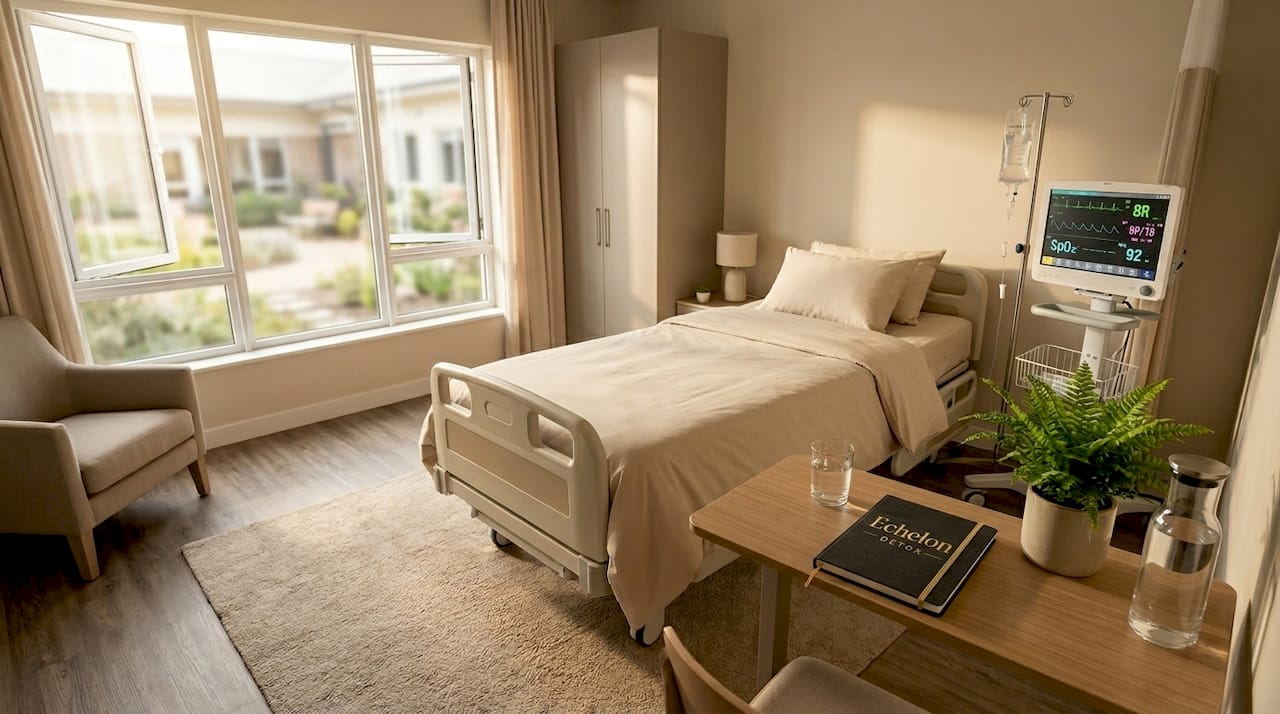
Outpatient ambulatory detox
Outpatient detox allows you to receive daily medical monitoring while returning home each evening. Major insurance plans including Blue Cross, Aetna, and Cigna cover many outpatient programs, making this a financially accessible option. This model works well for entrepreneurs with mild to moderate withdrawal risk, a stable home environment, and someone reliable present during peak symptom hours.
Concierge and private in-home detox
Concierge detox brings licensed physicians and nurses directly to your home or private residence. This model, offered by services like Echelondetox, is purpose-built for executives and business owners who require absolute discretion and personalized care. No waiting rooms, no facility admissions records, and no disruption to your professional identity.
Standard medications used across all settings include:
- Benzodiazepines (such as diazepam or lorazepam) to prevent seizures and reduce anxiety
- Thiamine (Vitamin B1) to prevent Wernicke's encephalopathy, a serious neurological complication
- Anticonvulsants like carbamazepine as an alternative or adjunct to benzodiazepines
- Supportive agents for hydration, sleep, and blood pressure stabilization
These medications reduce seizure risk and neurological complications, making the difference between a managed withdrawal and a medical emergency.
| Detox setting | Supervision level | Entrepreneur fit |
|---|---|---|
| Inpatient/residential | 24/7 on-site medical team | Best for high withdrawal risk or no home support |
| Outpatient ambulatory | Daily check-ins, remote monitoring | Suitable for mild to moderate risk with reliable home support |
| Concierge in-home | 24/7 private physician and nurse | Ideal for executives needing full discretion and flexibility |
Pro Tip: Before choosing a setting, request a formal intake assessment from a licensed clinician. The right program is determined by your medical history and withdrawal risk, not by what feels least disruptive to your calendar.
How to assess your alcohol withdrawal risk and choose between outpatient and inpatient detox
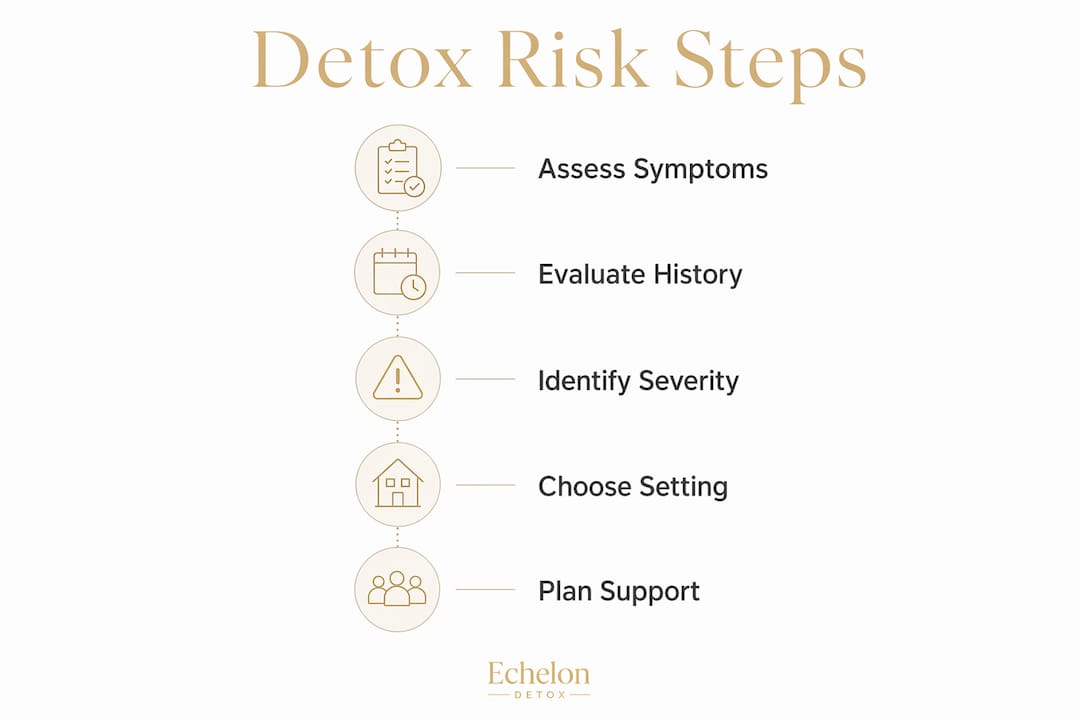
Withdrawal risk is the single most important variable in choosing your detox setting. Symptoms peak between 12 and 48 hours after your last drink, which means the most dangerous window often overlaps with your first full business day of detox. Planning around this timeline is not optional. It is a clinical necessity.
Delirium tremens, the most severe form of alcohol withdrawal, carries a mortality rate up to 15% if untreated. With proper medical supervision, that rate drops below 1%. This single statistic explains why self-managed detox is not a calculated risk. It is an unnecessary one.
The ASAM Criteria provides a multidimensional framework clinicians use to match you to the right level of care. It evaluates six dimensions: withdrawal potential, medical conditions, emotional and behavioral conditions, readiness to change, relapse potential, and your living environment. Entrepreneurs often score well on motivation but underestimate their home environment dimension, particularly if they live alone or have limited support staff.
Use this checklist to assess your outpatient readiness:
- Do you have a history of seizures or prior DTs? If yes, inpatient care is the safer choice.
- Is there a competent, sober adult who can stay with you during peak symptom hours (hours 12 to 72)?
- Do you have reliable transportation to an emergency room within 20 minutes?
- Is your home environment low-stress and free of alcohol access?
- Have you had a clinical assessment confirming mild to moderate withdrawal risk?
"Just being reachable is not enough. A competent observer and a clear escalation plan are mandatory for outpatient detox to be safe." — Outpatient vs Inpatient Alcohol Detox Safety
Pro Tip: Entrepreneurs consistently overestimate their ability to push through discomfort. Withdrawal symptoms can worsen suddenly after an initially manageable first day. Build your detox plan around the worst-case timeline, not the best-case one.
What steps help entrepreneurs detox while managing business responsibilities?
Executing a safe detox while protecting your business requires preparation before your last drink, not after. The withdrawal danger signs that require emergency escalation can appear without warning, so your business continuity plan and your medical plan must be ready simultaneously.
Follow this preparation sequence:
- Schedule your detox around the peak risk window. Block days two and three completely. Delegate all time-sensitive decisions to a trusted operator or COO before you begin.
- Arrange your medical supervision in advance. Whether outpatient or in-home, confirm your physician's availability and emergency escalation protocol before day one.
- Prepare your home environment. Remove all alcohol, stock electrolyte drinks and light foods, and confirm your support person's schedule for the full 72-hour window.
- Communicate selectively and strategically. You do not owe anyone a medical explanation. A planned "personal leave" communicated to key stakeholders is sufficient and professional.
- Establish a telehealth check-in schedule. Many concierge programs use secure telehealth platforms to monitor vitals and symptoms without requiring in-person visits for every check-in, preserving your privacy.
- Plan your transition to next-step care. Identify your post-detox program before you start. Detox alone does not address the behavioral drivers of alcohol use.
| Preparation step | Timing | Responsible party |
|---|---|---|
| Business delegation and schedule block | 5 to 7 days before | You and your operations lead |
| Medical intake and risk assessment | 3 to 5 days before | Licensed clinician |
| Home environment preparation | 1 to 2 days before | You and support person |
| Peak symptom monitoring | Hours 12 to 72 | Medical team and support person |
| Post-detox program enrollment | Before detox begins | You and your care coordinator |
Pro Tip: Use a HIPAA-compliant telehealth platform for daily check-ins during outpatient detox. This keeps your medical team informed without requiring you to leave your home or appear at a clinic where you might be recognized.
How can entrepreneurs build post-detox recovery systems to prevent relapse?
Detox alone is insufficient for lasting recovery. The transition from detox to structured follow-up care is the highest-risk period for relapse, and entrepreneurs face compounding pressure during this window because business demands do not pause for recovery.
Post-detox relapse risk rises steeply without structured next-step care. The most effective recovery systems for business owners combine clinical support with peer accountability and operational adjustments.
Build your recovery support system using these components:
- Intensive outpatient program (IOP). An IOP typically runs three to five days per week for several hours per session, allowing you to maintain business operations while receiving structured therapy and medical oversight.
- A recovery support board. Identify two to three people who understand both your recovery and your business. This might include a recovery coach, a sober peer in your industry, and one trusted business advisor who knows your situation.
- Stress trigger mapping. Document your specific high-risk scenarios: board meetings, fundraising cycles, travel, or conflict with co-founders. Build a written response plan for each one before the situation arises.
- Virtual peer support. Groups like SMART Recovery and online AA meetings allow you to participate discreetly from any location, removing the logistical barrier that often prevents entrepreneurs from engaging with peer support.
- Early warning sign tracking. Identify your personal behavioral signals that precede relapse risk, such as skipping meals, social withdrawal, or working past midnight. Treat these as clinical indicators, not personal failures.
The guide on returning to work after detox from Echelondetox outlines how to reintegrate professionally without compromising your recovery momentum. The key principle is that your recovery schedule is a non-negotiable business commitment, not a personal preference.
Pro Tip: Apply SMART-R goal setting to your recovery: Specific, Measurable, Achievable, Relevant, Time-bound, and Reviewed. Treat your sobriety milestones with the same rigor you apply to revenue targets.
Key takeaways
Safe, discreet alcohol detox for entrepreneurs requires matching your withdrawal risk to the right medically supervised setting, preparing your business before detox begins, and committing to structured post-detox care to prevent relapse.
| Point | Details |
|---|---|
| Medical supervision is non-negotiable | Delirium tremens carries up to 15% mortality untreated; supervised detox drops that risk below 1%. |
| Match setting to risk, not convenience | Use ASAM Criteria dimensions to choose inpatient, outpatient, or concierge detox based on your clinical profile. |
| Prepare your business before day one | Delegate decisions and block peak symptom days (hours 12 to 72) before starting detox. |
| Concierge detox protects your identity | In-home physician-guided programs provide 24/7 care without facility records or public exposure. |
| Post-detox structure prevents relapse | Enroll in an IOP and build a recovery support board before completing detox. |
What I've learned about entrepreneurs and alcohol recovery
I have worked with enough high-performing business owners to recognize a consistent pattern. The same drive that builds a company also delays treatment. Entrepreneurs reframe dependency as stress management, rationalize consumption as networking, and treat recovery as something to schedule after the next funding round or product launch.
The uncomfortable truth is that sobriety is a competitive advantage, not a concession. The clarity, sleep quality, and emotional regulation that come with sustained recovery translate directly into better decisions, stronger relationships, and more durable leadership. I have seen founders describe their first sober quarter as the most productive period of their careers.
The other pattern I see is underestimating the medical severity of withdrawal. Entrepreneurs are accustomed to tolerating discomfort and pushing through difficulty. Alcohol withdrawal does not respond to willpower. It responds to medical management. The home detox safety guide at Echelondetox covers this clearly: the goal is not to endure withdrawal. It is to manage it safely so you can get to the other side with your health and your business intact.
Prioritize the long-term asset, which is you, over the short-term optics of appearing available and in control. The most effective thing you can do for your company right now may be taking five days to do this properly.
— Nichol
Discreet, physician-guided detox designed for your lifestyle
If you are ready to address alcohol use without disrupting your business or compromising your privacy, Echelondetox provides exactly that.

Echelondetox is a private, concierge detox service that brings licensed physicians and nurses directly to your home, serving clients nationwide with 24/7 medical supervision. Every plan is customized to your health history, withdrawal risk, and schedule. There are no facility admissions, no waiting rooms, and no exposure. Insurance coordination is available, and your care team handles the logistics so you can focus on recovery. Start with a confidential consultation and take the first step toward reclaiming your health on your own terms. Begin your recovery with Echelondetox today.
FAQ
What is alcohol detox for entrepreneurs?
Alcohol detox for entrepreneurs is medically supervised withdrawal management designed to accommodate the privacy, scheduling, and operational demands of business owners. It uses the same clinical protocols as standard detox, including CIWA-Ar monitoring and benzodiazepine therapy, delivered in settings that minimize professional disruption.
Is outpatient detox safe for business owners?
Outpatient detox is safe for individuals with mild to moderate withdrawal risk who have a competent support person at home and a clear emergency escalation plan. It is not appropriate for anyone with a history of seizures, prior DTs, or an unstable home environment.
How long does alcohol withdrawal last?
Withdrawal symptoms typically begin within six hours of the last drink, peak between 12 and 48 hours, and resolve for most people within five to seven days. Severe symptoms like DTs can appear up to 72 hours after the last drink.
Can I run my business during alcohol detox?
You should not make significant business decisions during peak withdrawal hours, which span hours 12 to 72. Delegate time-sensitive responsibilities before you begin and resume normal operations gradually after the acute phase resolves, typically after day four or five.
What comes after detox for entrepreneurs?
Detox is the first clinical step, not the full solution. Enrolling in an intensive outpatient program and building a structured recovery support system immediately after detox significantly reduces relapse risk and supports long-term sobriety alongside business responsibilities.