

Detox without leaving work is defined as the practice of integrating medically sound, recovery-supportive habits into your existing professional schedule rather than stepping away from your career to pursue treatment. For busy executives, attorneys, physicians, and entrepreneurs, this approach addresses one of the most common barriers to seeking help: the fear that recovery requires disappearing from professional life. The good news is that sustainable detox strategies, from structured hydration and nutrition to digital boundaries and concierge medical support, can be designed around your workday without sacrificing performance or privacy.
What are the essential habits for office-friendly detoxification?
Office-friendly detoxification is built on four pillars: scheduled hydration, protein-rich nutrition, micro-movement, and sensory support. These are not optional add-ons. They are the physiological foundation that allows your body to process and eliminate toxins while your brain stays sharp enough to lead a meeting or close a deal.
Wellness-focused detox strategies for busy professionals prioritize metabolic efficiency using batch-cooked, protein-rich meals and scheduled hydration to support detoxification without causing energy depletion during work. Hitting 2 to 3 liters of water daily is not a suggestion. It is the minimum threshold for supporting liver and kidney function during active detox.
Here are the core habits that translate directly to the office environment:
- Hydration scheduling: Set a 500ml water intake target at the start of each work hour. Herbal teas such as dandelion root, peppermint, and ginger add digestive support and variety without caffeine spikes.
- Portable nutrition: Batch-cooked meals and snacks using pre-chopped vegetables, cooked grains, and lean proteins in portable containers remove the daily decision of what to eat. This matters because decision fatigue is a real drain on willpower during detox.
- Micro-movement breaks: Calf raises during bathroom breaks, standing after every meeting, and 10-minute walks at lunch all support lymph flow and reduce cortisol, which directly improves detox outcomes.
- Anti-inflammatory snacks: Almonds, walnuts, blueberries, and hummus with raw vegetables provide B vitamins, sulfur compounds, and antioxidants that strengthen detox pathways without causing blood sugar crashes mid-afternoon.
- Sensory support: A small diffuser with eucalyptus or lavender oil at your desk, combined with ergonomic adjustments, reduces ambient stress that would otherwise tax your nervous system during recovery.
Pro Tip: Stack new detox habits onto existing work cues. Place your water bottle next to your keyboard so it appears every time you sit down. Set your herbal tea preparation as the first step of your lunch break. Habit stacking removes the need to rely on motivation, which is unreliable during detox.
How to manage digital and sensory detox during work hours
Digital overload is a direct obstacle to physical detox. When your nervous system is constantly stimulated by notifications, emails, and screen glare, cortisol stays elevated and your body prioritizes stress response over cellular repair. Managing your digital environment is not a luxury. It is a clinical necessity during recovery.

A 7-day digital detox framework for working professionals recommends gradual technology reduction rather than total abstinence, which is both realistic and sustainable for people who cannot go offline. The goal is reducing cognitive load, not eliminating your phone.
Follow these steps to build a sensory detox routine around your work schedule:
- Implement a no-screen morning window. Avoid all devices for the first 60 minutes after waking. Use this time for hydration, light movement, or a brief breathing practice. This protects your cortisol rhythm and sets a calmer neurological baseline for the day.
- Set communication boundaries. Define specific windows for checking email, such as 9 a.m., 12 p.m., and 4 p.m. Log off messaging platforms after 7 p.m. These boundaries reduce the chronic low-grade stress that undermines detox.
- Unsubscribe and delete. Remove non-essential email lists and delete apps that trigger compulsive checking. Desk detox routines that include digital decluttering improve alertness and reduce fatigue during long screen hours.
- Schedule visual breaks. Every 20 minutes, practice palming: cup your hands over closed eyes for 30 seconds. Shift your focal point to a distant object for another 30 seconds. This reduces eye strain and gives your visual cortex a genuine rest.
- Use subtle aromatherapy. Peppermint and rosemary scents at your desk improve alertness without stimulants. Lavender in the late afternoon supports the transition toward rest. Sensory micro-rests like these sustain health more effectively than drastic behavioral changes.
Pro Tip: Set a recurring 20-minute timer on your phone labeled "Eyes and water." When it fires, you drink 200ml of water and do a 30-second palming exercise. Two habits, one cue, zero willpower required.
How to design a detox plan that fits around a busy business schedule
A detox plan around your business schedule succeeds when it is built on structure, not willpower. The professionals who sustain detox during work are not more disciplined. They have better systems.
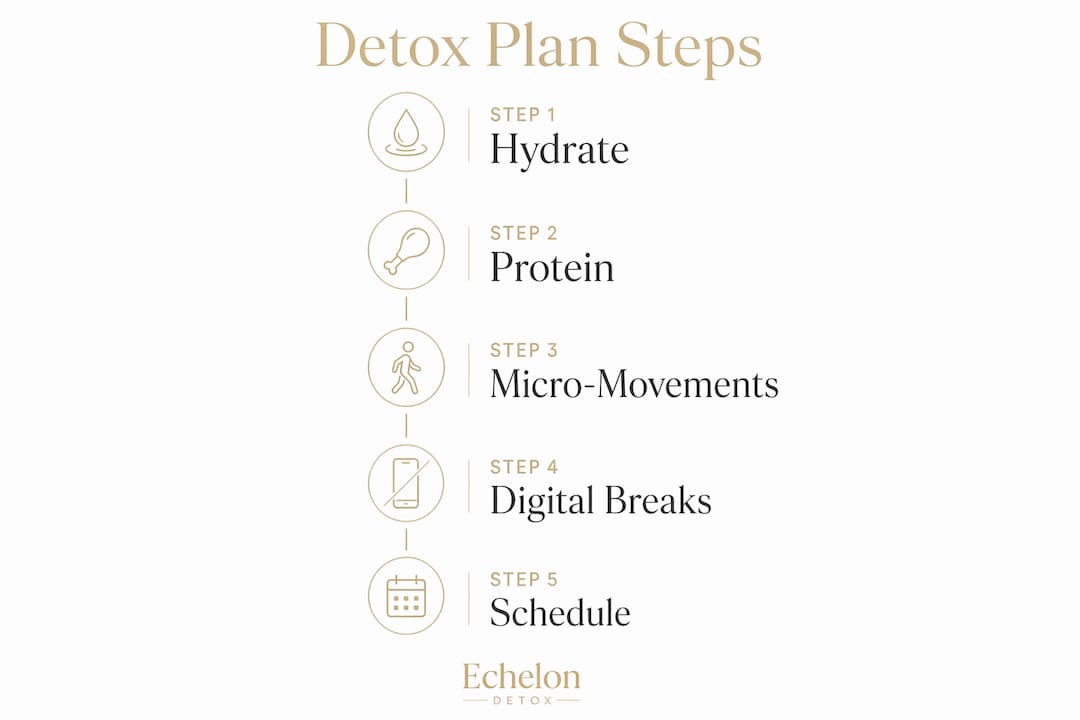
Quick detox plans for busy professionals avoid extreme fasting and instead focus on foods rich in B vitamins, sulfur compounds, antioxidants, soluble fiber, and fermented foods, combined with sleep optimization. This approach preserves cognitive function and work productivity while supporting the body's natural elimination processes.
Here is a step-by-step framework for building your detox plan around work:
- Audit your calendar. Identify natural break points: lunch, mid-morning, and mid-afternoon. These become your hydration and snack windows. Block them as recurring calendar events so they are protected.
- Batch prep on weekends. Spend 90 minutes on Sunday preparing proteins, grains, and chopped vegetables for the week. Batch cooking removes daily decision fatigue and makes detox-friendly eating realistic on a packed Tuesday.
- Use repeatable meal templates. Monday through Friday, rotate three breakfast options, three lunch options, and three dinner options. Reducing food variety during detox lowers cognitive load without reducing nutritional quality.
- Schedule movement and breathing. A 3-minute breathing pattern, inhaling for 4 seconds and exhaling for 6 seconds, fits between back-to-back meetings. A 10-minute walk after lunch is non-negotiable. These are not wellness extras. They are detox tools.
- Align detox intensity with workload. Plan your most structured detox days around lighter calendar weeks. Avoid starting a new detox protocol the week of a major presentation or board meeting.
| Day type | Recommended detox focus |
|---|---|
| Light workday | Full meal prep, extended movement, digital boundaries |
| Moderate workday | Scheduled hydration, portable meals, breathing breaks |
| Heavy workday | Minimum: 2.5 liters water, protein snacks, no-screen morning |
| Travel day | Herbal teas, pre-packed snacks, 10-minute hotel room movement |
Common challenges and how to overcome them during workplace detox
Detox during a work schedule is not without friction. Fatigue, cravings, social pressure, and stress are predictable obstacles. Knowing they are coming and having a response ready is what separates professionals who succeed from those who abandon the plan by Wednesday.
- Cravings: Schedule a protein-rich snack every 3 hours. Hunger is the primary trigger for cravings during detox. Almonds, hard-boiled eggs, or a small portion of hummus with vegetables address the physiological need before the craving becomes urgent.
- Fatigue: Structured stress breaks using journaling and breathwork enhance your capacity to maintain detox alongside work. A 5-minute journaling session at midday, writing three things you are grateful for and one thing you will protect your energy from, takes less time than a second cup of coffee and delivers more sustained focus.
- Social and work events: Arrive with a plan. Order sparkling water with lime before anyone asks what you are drinking. Choose the protein and vegetable options from the menu. You do not owe anyone an explanation about your choices.
- Decision fatigue: Automate as much as possible. Pre-decide your meals, your hydration schedule, and your movement breaks. Professionals who treat detox as a sustainable system rather than a short punishment are significantly more likely to maintain it.
- When to seek professional support: Some detox processes, particularly those involving alcohol or benzodiazepines, carry genuine medical risk and require clinical supervision. If you are managing withdrawal symptoms alongside work demands, that is not a situation for self-management.
Recovery does not require you to disappear from your life. With the right support, it can happen within it, discreetly, safely, and on your terms.
Knowing when to escalate from self-directed wellness habits to medically supervised detox is a sign of self-awareness, not weakness. The detox and professional functioning relationship is well-documented: proper medical support during withdrawal actually protects your cognitive performance rather than compromising it.
What detox options let you keep working: at-home, outpatient, and concierge compared
Not all detox modalities carry the same work interruption risk. Understanding your options allows you to choose the level of support that matches both your clinical needs and your professional obligations.
At-home detox offers maximum autonomy and schedule control. For individuals managing mild to moderate substance use, self-directed at-home protocols built around nutrition, hydration, and stress management can be effective. The limitation is the absence of clinical oversight, which becomes a safety concern with alcohol or sedative withdrawal.
Outpatient detox programs provide structured medical support through scheduled appointments, typically several times per week. This model preserves your ability to work but requires commuting to a clinic and managing appointment visibility, which can be a concern for professionals who prioritize privacy.
Concierge detox is the model that most directly addresses the needs of working professionals. Concierge detox offers privacy and medical oversight tailored to professionals who cannot afford extensive time away from work, with options including home-based clinical supervision, flexible scheduling, and complete confidentiality.
| Detox option | Clinical supervision | Work interruption risk | Privacy level |
|---|---|---|---|
| Self-directed at-home | None | Low | High |
| Outpatient program | Moderate | Moderate | Low to moderate |
| Concierge home detox | High (24/7 physician access) | Very low | Very high |
For executives and professionals managing alcohol or drug withdrawal, concierge detox for executives represents the highest standard of care with the lowest disruption to professional life. The clinical rigor is equivalent to inpatient treatment. The visibility is essentially zero.
Key takeaways
Detox without leaving work succeeds when it is built on automated habits, clinical-grade support where needed, and a realistic plan aligned with your actual schedule.
| Point | Details |
|---|---|
| Hydration is non-negotiable | Drink 2 to 3 liters of water daily to support liver and kidney detox function during work. |
| Batch prep removes daily friction | Weekend meal preparation eliminates decision fatigue and keeps detox-friendly nutrition accessible on busy workdays. |
| Digital boundaries protect recovery | Scheduled communication windows and no-screen mornings reduce cortisol and support neurological recovery. |
| Match detox intensity to workload | Plan the most structured detox days around lighter calendar weeks to avoid performance compromise. |
| Concierge detox preserves privacy | Physician-supervised home detox delivers clinical rigor with zero workplace visibility for professionals managing withdrawal. |
What I have learned about detox and professional performance
After working closely with professionals navigating recovery, one pattern stands out clearly: the people who succeed are not the ones who try hardest. They are the ones who design the best environment.
Extreme approaches, juice fasts, prolonged caloric restriction, or cold-turkey withdrawal without medical support, tend to collapse under the weight of a real workday. They demand too much willpower and deliver too much disruption. The professionals I have seen sustain genuine recovery are the ones who automate the basics, protect their mornings, and accept that small, consistent actions build more momentum than dramatic gestures.
There is also an uncomfortable truth worth naming directly. Some detox processes are medically serious. Alcohol withdrawal, in particular, carries risks that no amount of herbal tea or breathing exercises can address. If you are in that category, the most professional decision you can make is to get proper clinical support. Discreet, physician-guided options exist precisely for people in your position. Seeking that support is not a disruption to your career. It is what protects it.
The goal is not perfection. It is a sustainable system that keeps you functional, healthy, and moving forward, one well-designed workday at a time.
— Nichol
How Echelondetox supports professionals detoxing without disrupting work
If your detox needs go beyond nutrition and hydration, and you are managing withdrawal from alcohol or substances while trying to maintain your professional responsibilities, Echelondetox is built for exactly that situation.
Echelondetox provides 24/7 physician-guided, in-home detox care designed for professionals who require clinical supervision without the visibility of a traditional facility. Licensed physicians and nurses come to you. Your schedule, your privacy, and your dignity are protected throughout. Every detox plan for professionals is customized to your health history, withdrawal profile, and work demands, so recovery fits around your life rather than replacing it. Reach out to Echelondetox to learn how medically supervised home detox can support your recovery without a single colleague knowing.
FAQ
Can you really detox without missing work?
Yes. Detox without missing work is achievable through structured nutrition, hydration, micro-movement, and digital boundary practices integrated into your workday. For medically supervised withdrawal, concierge home detox services provide clinical care with no workplace visibility.
What foods support detox during work hours?
Foods rich in B vitamins, sulfur compounds, antioxidants, soluble fiber, and fermented options support detox pathways while preserving cognitive function. Portable options include almonds, blueberries, hard-boiled eggs, and pre-cooked grains with vegetables.
Is it safe to detox from alcohol while working?
Alcohol withdrawal carries genuine medical risk, including seizures and severe autonomic instability, and should not be self-managed. Physician-supervised concierge detox allows safe, medically monitored alcohol withdrawal at home with minimal disruption to your professional schedule.
How do I handle cravings at work during detox?
Schedule a protein-rich snack every 3 hours to address the physiological triggers behind cravings before they become urgent. Structured breathwork and brief journaling sessions at midday also reduce the stress response that amplifies cravings during work.
What is the difference between outpatient and concierge detox for professionals?
Outpatient detox requires regular clinic visits and carries moderate privacy risk. Concierge detox delivers equivalent clinical supervision directly to your home, with complete confidentiality and flexible scheduling designed around your professional obligations.