

You carry a level of professional responsibility that most people never experience. Every day, you make precise, high-stakes decisions while managing patient anxiety, physical strain, and the quiet weight of running a practice. When substance use becomes part of how you cope, seeking help feels terrifying. Home detox for dental professionals is a real, medically sound option that lets you begin recovery without stepping away from your life or exposing your reputation. This guide walks you through the medical criteria, preparation steps, execution, and long-term support you need to do this safely and confidently.
Table of Contents
- Key takeaways
- Understanding home detox for dental professionals
- Preparing for home detox as a dental professional
- Executing the home detox process
- Common challenges and how to manage them
- What to expect after home detox
- My perspective on discreet recovery in dental careers
- Confidential home detox support built for professionals
- FAQ
Key takeaways
| Point | Details |
|---|---|
| Medical suitability matters | Home detox is appropriate only for medically stable, motivated individuals without complex withdrawal histories. |
| Preparation protects you | Securing a trusted support person and confidential medical oversight before you start significantly reduces risk. |
| Symptom monitoring is non-negotiable | Daily tracking of withdrawal symptoms with a clear escalation plan keeps home detox safe. |
| Discretion is achievable | Private, physician-guided services exist specifically to protect your professional reputation. |
| Long-term recovery requires lifestyle shifts | Sustainable sobriety for dental professionals depends on addressing career-specific stressors, not just stopping substance use. |
Understanding home detox for dental professionals
Home detox, also called ambulatory detox, is a medically supervised withdrawal process that takes place in your own environment rather than a clinical facility. It is not simply stopping on your own. It involves medical assessment, monitoring, and often medication management, all coordinated through licensed medical providers who work around your schedule and location.
Home-based detox is appropriate only for highly motivated individuals who are medically stable and can be safely monitored. Patients with severe alcohol dependence, benzodiazepine use, or complex opioid histories typically require inpatient detox because withdrawal from these substances carries serious medical risks including seizures and cardiovascular complications.
Substances most relevant to dental professionals
Dental professionals face specific occupational exposures that shape which substances are most likely to require detox support:
- Opioids: Access to prescription analgesics creates a documented risk for misuse among dental providers.
- Alcohol: High-stress careers with irregular hours correlate with alcohol use disorder at elevated rates across healthcare professions.
- Benzodiazepines: Anxiety management in high-stakes work environments can lead to dependence on prescribed sedatives.
- Nitrous oxide: Occupational access makes inhalant misuse a concern unique to dental settings.
Withdrawal from alcohol and benzodiazepines carries the highest medical risk and should never be managed without clinical supervision, even at home. Opioid withdrawal, while intensely uncomfortable, is rarely life-threatening in otherwise healthy adults, making it more suitable for medically supervised home protocols.
Pro Tip: Before deciding between home and inpatient detox, request a formal clinical assessment from a licensed physician. This single step protects your safety and gives you a defensible, medically grounded starting point.
Preparing for home detox as a dental professional
Preparation is where most home detox attempts succeed or fail. Dental professionals face a specific set of concerns that general detox guidance does not address: protecting your license, managing your schedule, and maintaining confidentiality with colleagues and patients.
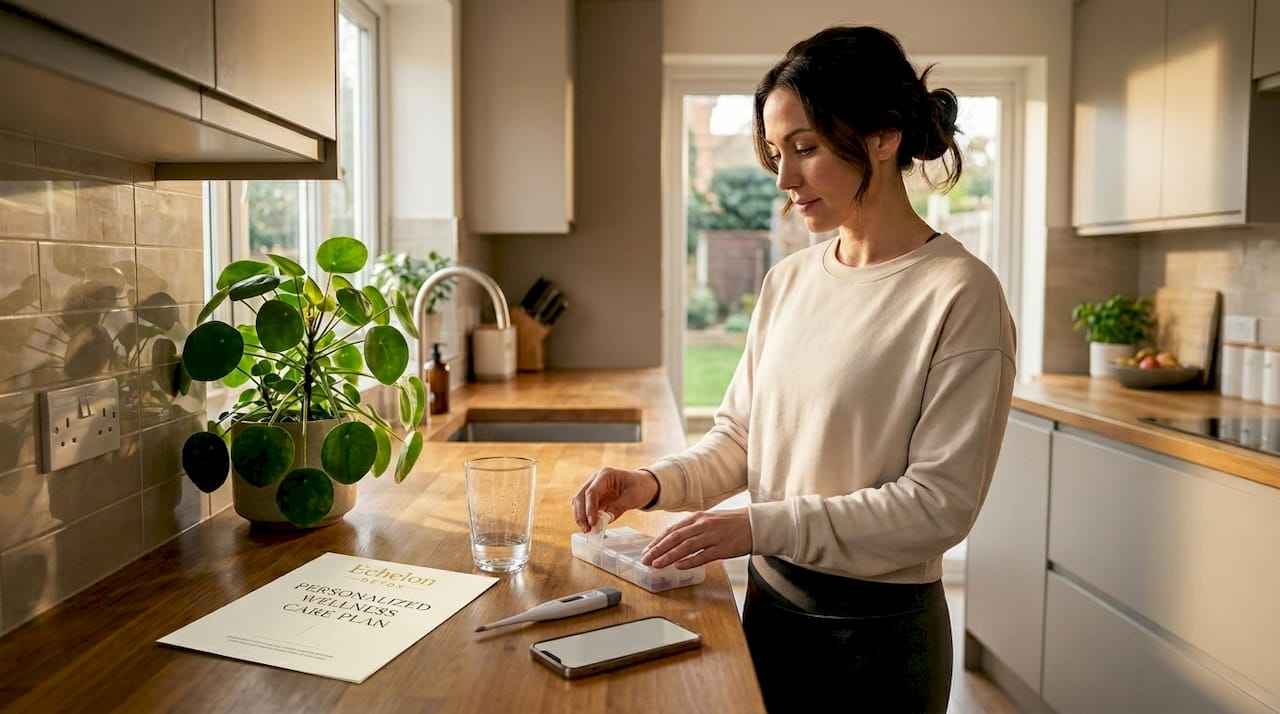
Locating confidential support
FindTreatment.gov provides 24/7 access to behavioral health treatment locators and crisis centers, many of which offer confidential intake processes. Beyond public resources, private concierge detox services are specifically designed for professionals who cannot risk public exposure.
Fear of professional repercussions is the primary barrier that stops licensed professionals from seeking help. Boutique and private detox environments exist precisely to address this, offering ultra-private accommodations and care that respects your professional standing.
Setting up your environment
| Preparation area | What to do |
|---|---|
| Trusted contact | Identify one person who knows your situation and can check in daily |
| Medical oversight | Confirm a licensed physician is available for monitoring and emergency guidance |
| Practice coverage | Arrange patient schedule coverage for at least 5 to 7 days without disclosing the reason |
| Home environment | Remove substances, stock nutritional foods, prepare a quiet recovery space |
| Emergency plan | Know your nearest emergency room and have your physician's direct contact ready |
Additional steps that protect you during this period:
- Notify your state's Physician Health Program (PHP) or equivalent dental professional assistance program confidentially. These programs exist to help, not penalize.
- Inform your most trusted colleague that you are managing a health matter, without specifics, and arrange coverage.
- Disable work notifications during the most acute withdrawal phase, typically days one through three.
Pro Tip: Confidentiality in professional detox care often exceeds standard HIPAA protections in boutique settings. Ask any provider directly about their confidentiality policies before sharing identifying information.
Executing the home detox process
Once your preparation is complete, execution requires structure. Withdrawal is not linear, and dental professionals are particularly prone to pushing through discomfort and underreporting symptoms because that is what the job trains you to do. Home detox requires the opposite instinct: attentive self-monitoring and a willingness to escalate when needed.
Step-by-step daily structure
- Morning check-in: Record your symptoms using a standardized withdrawal scale. The Clinical Opiate Withdrawal Scale (COWS) for opioids and the Clinical Institute Withdrawal Assessment (CIWA) for alcohol are both available in simplified formats for home use.
- Medication review: Take any prescribed medications on schedule. Do not adjust doses based on how you feel without consulting your supervising physician.
- Hydration and nutrition: Drink water consistently. Withdrawal depletes electrolytes rapidly. Bone broth, electrolyte solutions, and small, frequent meals support physical stability.
- Midday physician contact: Check in with your medical supervisor by phone or video. Report any new or worsening symptoms immediately.
- Sensory recovery time: Holistic support addressing nervous system recovery significantly improves detox outcomes for high-stress professionals. This means deliberate sensory quiet: dim lighting, minimal noise, no screens where possible.
- Evening documentation: Log your symptom scores, food and fluid intake, sleep quality, and any emotional shifts. This record helps your physician adjust your care plan in real time.
- Sleep preparation: Withdrawal commonly disrupts sleep. Avoid stimulants after noon. A cool, dark room and a consistent wind-down routine reduce sleep disruption.
Symptoms that require immediate escalation
- Seizures or muscle tremors that worsen over time
- Chest pain, irregular heartbeat, or difficulty breathing
- Fever above 101°F combined with confusion
- Hallucinations or severe disorientation
- Inability to keep fluids down for more than 12 hours
Structured detox planning that includes withdrawal symptom monitoring and medical history review is the clinical standard for safe home detox from alcohol, benzodiazepines, and opioids. If any of the above symptoms appear, call your supervising physician first and emergency services immediately if they are unreachable.
Pro Tip: Decision fatigue is real during withdrawal. Prepare a laminated one-page reference card with your physician's number, your escalation symptoms, and your medication schedule. When your thinking is foggy, you will not have to search for information.
Common challenges and how to manage them
Even well-prepared home detox attempts hit friction points. Knowing what to expect reduces the chance that a difficult moment becomes a dangerous one.
- Isolation: Dental professionals are accustomed to constant social interaction at work. The sudden quiet of home detox can feel disorienting. Schedule brief, structured check-in calls with your support person twice daily rather than leaving contact open-ended.
- Temptation and access: If substances are accessible in your home or practice, they need to be removed or secured before day one. Ask your trusted contact to hold or dispose of anything that could be accessed during a weak moment.
- Professional anxiety: Worrying about your practice while you are physically unwell amplifies withdrawal discomfort. Write a brief, honest out-of-office message citing a medical matter. Patients respect honesty about health without needing details.
- Burnout compounding withdrawal: The same career that contributed to substance use does not pause during detox. Recognize that irritability, low motivation, and emotional numbness during withdrawal are physiological, not character failures.
"Detoxification is the essential first step in recovery and requires clinical care that balances medical monitoring with professional discretion." Private detox providers who understand the professional context deliver both without compromise.
Relapse prevention during home detox is less about willpower and more about structure. Remove access, maintain medical contact, and keep your daily schedule predictable. Boredom and unstructured time are the conditions where cravings intensify most.
What to expect after home detox
Completing detox is a genuine achievement. It is also the beginning of a longer process, not the end of one. The physical withdrawal phase typically resolves within five to ten days depending on the substance, but the neurological and emotional recovery extends well beyond that.
Early recovery: what the first 30 days look like
| Area | What you may experience | What helps |
|---|---|---|
| Sleep | Disrupted, vivid dreams, early waking | Consistent schedule, no screens before bed |
| Mood | Irritability, low motivation, anxiety | Therapy, peer support, structured routine |
| Cognition | Difficulty concentrating, forgetfulness | Light tasks, reduced patient load initially |
| Physical energy | Fatigue, appetite changes | Nutritious food, gentle movement, hydration |
| Cravings | Intermittent and triggered by stress | Coping plan, support contact, physical activity |
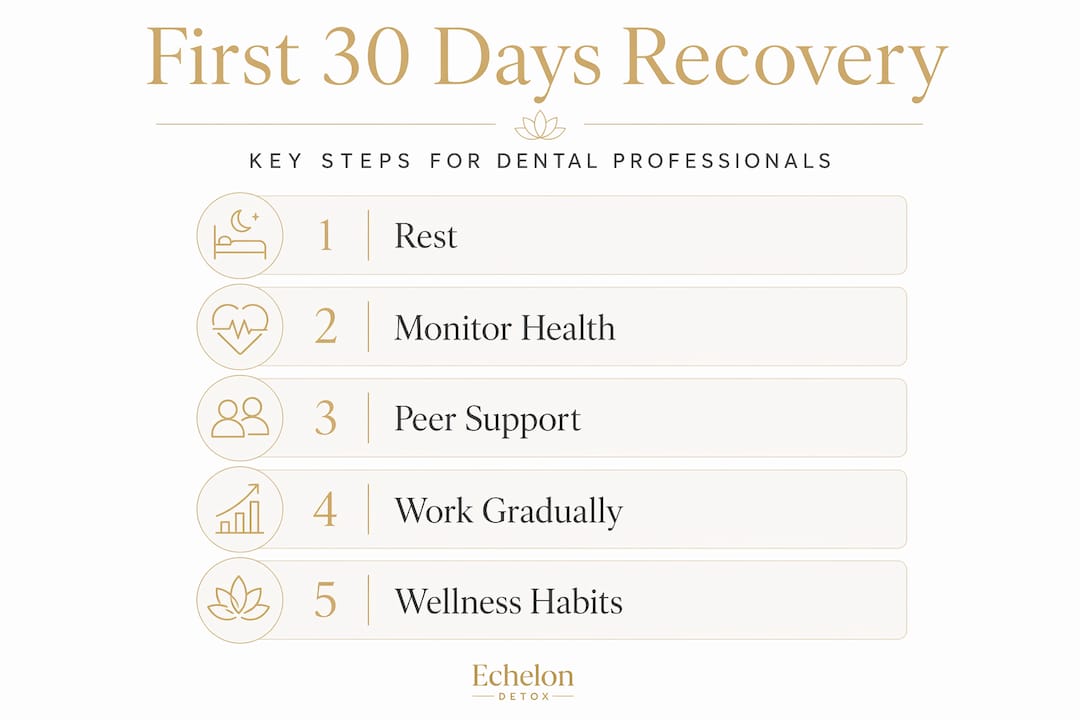
Returning to practice should be gradual. Many dental professionals benefit from a reduced patient schedule for the first two weeks, giving the nervous system time to stabilize before re-entering the high-focus demands of clinical work.
Sustainable recovery for dental professionals also means addressing the occupational conditions that contributed to substance use. Long-term recovery for dentists depends on fundamental lifestyle shifts that contrast the typical dental workday. This means physical movement that is dynamic rather than static, mental disengagement through genuinely low-stakes activities, and emotional depth through relationships outside the practice.
Integrating holistic oral health practices such as oil pulling and biocompatible dental material awareness into your post-detox wellness routine supports systemic health and reinforces the connection between oral and whole-body recovery.
Continuing care through therapy, a peer support group for healthcare professionals, or a formal monitoring agreement with your state's dental assistance program significantly reduces relapse risk. These are not signs of weakness. They are evidence-based tools that work.
My perspective on discreet recovery in dental careers
I have spent years working alongside professionals who carry enormous responsibility and almost no permission to be human about it. What I have seen consistently is that dental professionals do not struggle with motivation. They struggle with permission. Permission to stop. Permission to ask for help. Permission to prioritize their own health without feeling like they are failing their patients.
What I have learned is that the fear of exposure is often more paralyzing than the detox itself. The professionals who do best in home detox are not the ones with the mildest dependencies. They are the ones who stopped treating their recovery as a secret to be managed and started treating it as a medical process to be supported.
The dental career is genuinely demanding in ways that most recovery frameworks do not account for. The static posture, the sensory overload, the emotional labor of managing anxious patients while performing precise physical work. These are not excuses. They are context. And recovery that ignores that context tends not to last.
My honest take: if you are considering home detox, do not do it without a physician. Not because you cannot handle discomfort, but because you deserve the same standard of care you give your patients. You would not let a patient manage a complex medical process alone. Do not do that to yourself.
— Nichol
Confidential home detox support built for professionals
If you are ready to take the next step, you deserve care that meets you where you are without requiring you to explain yourself to a waiting room.

Echelondetox provides physician-guided, in-home detox care designed specifically for professionals who need medical supervision without public exposure. Licensed physicians and nurses come to you, manage your withdrawal safely, and coordinate care around your schedule and privacy requirements. Every plan is built around your specific health history, substance use, and professional obligations. You do not have to choose between your health and your career. Echelondetox exists because those two things are not in conflict. Reach out confidentially to learn what a personalized home detox plan looks like for your situation.
FAQ
What makes home detox appropriate for dental professionals?
Home detox is appropriate when a dental professional is medically stable, highly motivated, and has access to licensed medical supervision. It allows recovery without public exposure or extended absence from practice.
Is home detox safe for alcohol withdrawal?
Alcohol withdrawal carries serious medical risks including seizures. It requires clinical supervision even at home. Never attempt alcohol detox without a licensed physician monitoring your symptoms and managing medication.
How do I protect my dental license during detox?
Contact your state's dental professional assistance program confidentially before beginning detox. These programs are designed to support recovery without triggering automatic license action, and confidentiality protections are strong.
How long does home detox typically take?
The acute withdrawal phase for most substances resolves within five to ten days. Medical supervision is most critical during the first 72 hours, when withdrawal symptoms are typically at their peak.
Can I return to seeing patients during home detox?
No. The acute detox phase requires full rest and medical monitoring. Most dental professionals benefit from a minimum of five to seven days away from clinical duties, followed by a gradual return with a reduced patient schedule.