

For San Francisco professionals, the decision to address alcohol dependence carries a particular weight. Your reputation, your career, and your privacy all feel like they're on the line at once. The appeal of handling detox quietly, in the comfort of your own home, is completely understandable. But alcohol withdrawal is one of the few detox processes that can become medically life-threatening without proper supervision, and that reality changes everything about how you should approach it. This guide walks you through the medical criteria, preparation steps, the process itself, and what comes after, so you can make informed, safe decisions.
Table of Contents
- Can you detox from alcohol at home? Understanding your risk
- Essential preparation: What you need before starting alcohol detox at home
- Step-by-step: How to safely detox from alcohol at home in San Francisco
- Staying sober after detox: Avoiding relapse and building support
- Why most people underestimate the risks of at-home alcohol detox
- Get discreet, professional help for home alcohol detox in San Francisco
- Frequently asked questions
Key Takeaways
| Point | Details |
|---|---|
| Medical screening crucial | A doctor must clear you before attempting alcohol detox at home to ensure safety. |
| Supervision saves lives | At-home detox requires professional oversight to prevent dangerous complications. |
| Preparation prevents relapse | Having the right support, supplies, and follow-up care is essential for long-term recovery. |
| Know when to seek inpatient care | Severe dependence or health risks mean home detox is not safe and inpatient care is necessary. |
| Protect your privacy | Telehealth and discreet home services allow professionals to recover safely and confidentially. |
Can you detox from alcohol at home? Understanding your risk
Now that you understand the challenge, the first step is to determine if at-home detox is a safe option for you.
Not everyone is a candidate for home-based alcohol detox. The American Society of Addiction Medicine (ASAM) uses a set of criteria to assess the appropriate level of care for someone with alcohol use disorder (AUD). These criteria evaluate your medical history, withdrawal history, current health status, mental health, and the stability of your home environment. Understanding where you fall on this spectrum is not optional. It is the foundation of a safe plan.
When home detox might be appropriate:
- Mild to moderate alcohol dependence with no prior history of severe withdrawal
- No significant co-occurring medical conditions such as liver disease, heart problems, or seizure disorders
- A stable, supportive home environment with at least one responsible adult present
- Access to a physician who can conduct an assessment and provide ongoing oversight
- No history of delirium tremens (DTs), which is a severe form of withdrawal involving confusion, fever, and seizures
When inpatient care is the right choice:
- History of seizures or DTs during previous withdrawal episodes
- Significant medical or psychiatric co-occurring conditions
- Inadequate home support or an unstable living situation
- Daily heavy alcohol use over an extended period
- Prior failed attempts at outpatient or home detox
Home detox is suitable only after thorough screening for stable health, no severe dependence, no history of complications, and adequate home support. Without those conditions, inpatient care is required. This is not a judgment. It is a medical reality.
Safety note: Unsupervised alcohol detox carries documented fatal risks. Authoritative sources consistently warn that without professional monitoring, complications like seizures and cardiac events can occur without warning. Commercial services that claim safety without proper medical screening should be approached with serious caution.
| Factor | Home detox | Inpatient care |
|---|---|---|
| Medical supervision | Physician-guided, remote or in-person | 24/7 on-site clinical team |
| Appropriate for | Low-risk, mild to moderate dependence | Moderate to severe dependence |
| Medication access | Prescribed and monitored remotely or in-home | Immediate on-site administration |
| Emergency response | Requires 911 or urgent care | Immediate on-site response |
| Privacy level | High | Moderate |
| Cost | Variable | Higher, often covered by insurance |
Choosing the wrong setting is not just inconvenient. It can be fatal. Take the assessment process seriously before you proceed.
Essential preparation: What you need before starting alcohol detox at home
Once you've determined home detox could be safe for you, it's vital to gather the right resources and support before you begin.
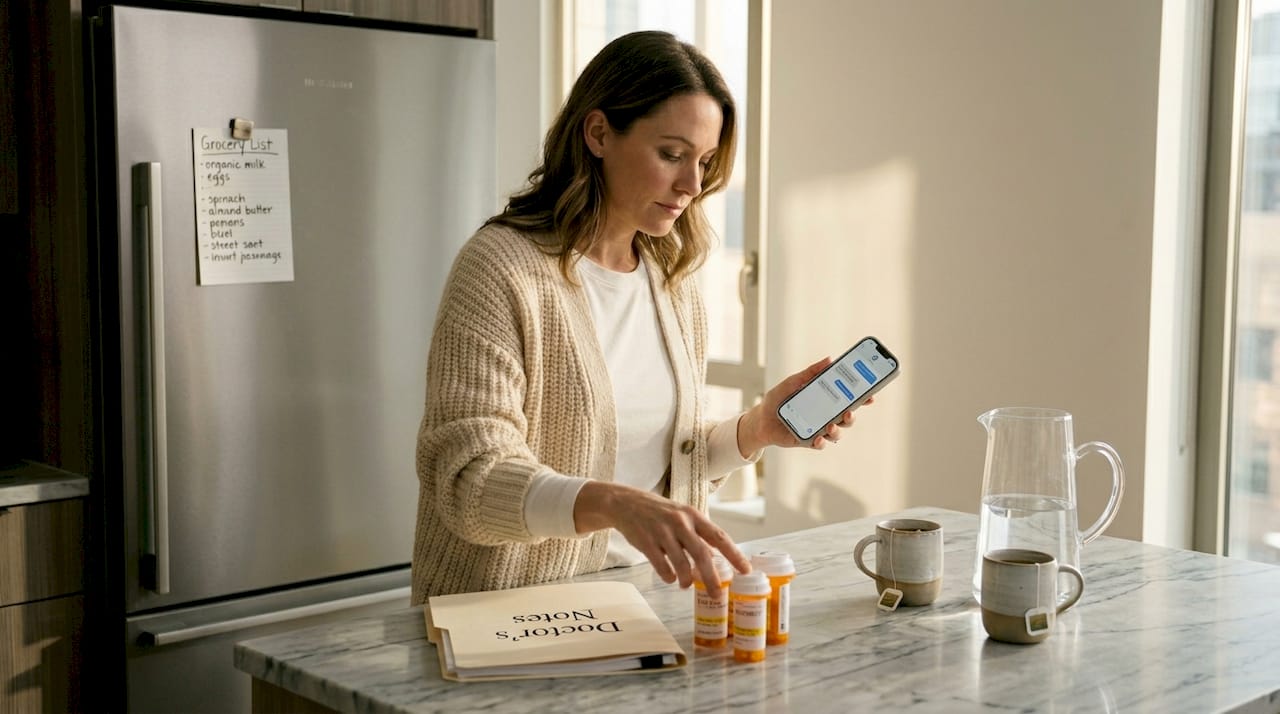
Preparation is where most people underinvest their effort. The clinical reality is that home detox is viable only for low-risk cases as defined by ASAM levels of care, and even then, 24/7 support is essential to manage life-threatening edge cases like DTs. Showing up to detox without a plan is like scheduling surgery without an anesthesiologist. The procedure might start, but the risks multiply quickly.
Medical preparation:
- Schedule a comprehensive medical evaluation with a physician who specializes in addiction medicine before you stop drinking
- Discuss your drinking history honestly, including how much you drink daily, for how long, and any previous withdrawal experiences
- Ask about medications such as benzodiazepines, which are commonly prescribed to manage withdrawal symptoms and prevent seizures
- Confirm that your physician or a nurse will be reachable around the clock during the first 72 hours, which is typically the highest-risk window
Environmental preparation:
- Designate a calm, private space in your home where you can rest without interruption
- Remove all alcohol from the premises before your start date
- Stock up on electrolyte drinks, water, light foods, and any prescribed medications
- Have a thermometer, blood pressure cuff, and pulse oximeter available so your support person can track your vitals
Social and logistical preparation:
- Identify a trusted support person, a family member, close friend, or private caregiver, who can stay with you throughout the process
- Establish a clear emergency protocol, including the nearest emergency room and when to call 911
- Arrange for work coverage in advance, using medical leave or personal time if needed
Pro Tip: If you're concerned about workplace privacy, speak with an employment attorney or HR professional about your rights under the Family and Medical Leave Act (FMLA) before disclosing anything. Many San Francisco professionals use FMLA to take protected medical leave without specifying the nature of their condition.
| Preparation category | What you need | Why it matters |
|---|---|---|
| Medical | Physician assessment, prescription medications | Prevents seizures, manages symptoms safely |
| Environment | Quiet space, supplies, monitoring tools | Reduces stress, enables vital tracking |
| Social support | Trusted support person, emergency contacts | Ensures someone can respond if complications arise |
| Work and logistics | Leave arrangements, coverage plans | Protects privacy and reduces stress during detox |
The more thoroughly you prepare, the safer and more manageable the process becomes. Cutting corners here is where things go wrong.
Step-by-step: How to safely detox from alcohol at home in San Francisco
With your preparations in place, follow these steps to maximize both safety and privacy during your home alcohol detox.
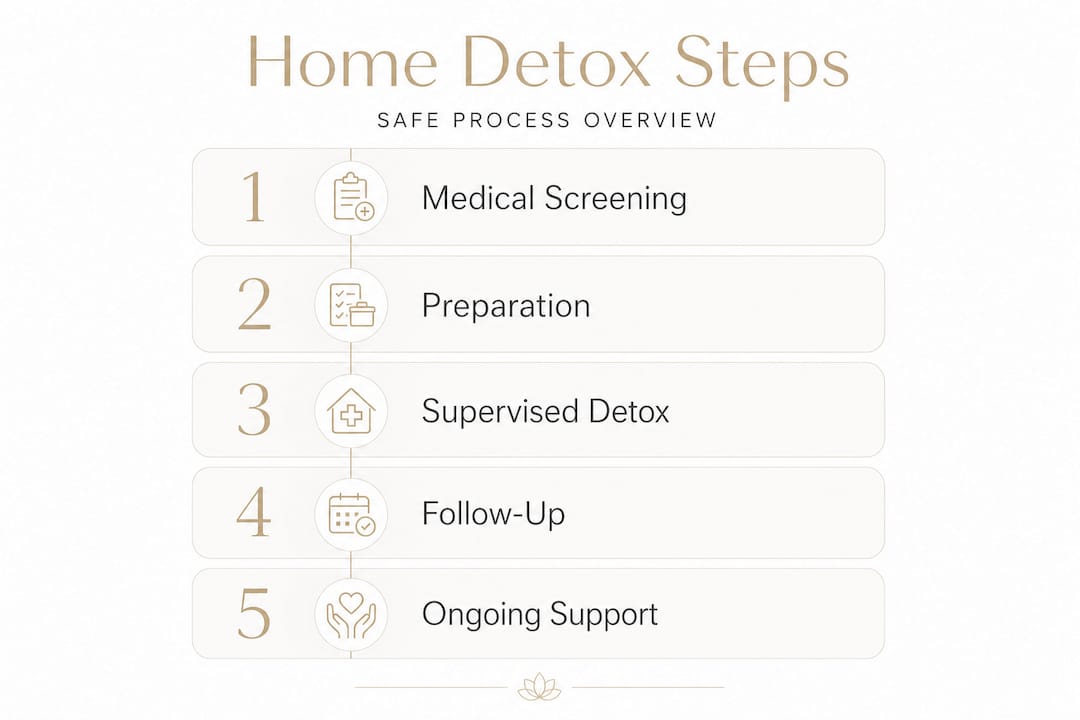
The detox process itself typically unfolds over five to seven days, with the most intense symptoms occurring in the first 48 to 72 hours. Here is a structured approach to navigating it safely.
-
Complete your medical evaluation. Before your last drink, confirm your physician has reviewed your health history, assessed your withdrawal risk, and provided a clear medication plan if appropriate. Do not begin without this step.
-
Set your start date and inform your support person. Choose a time when you have at least five to seven days with minimal obligations. Brief your support person on what to expect, including the symptoms they should watch for and when to escalate to emergency care.
-
Stop drinking gradually or abruptly as directed by your physician. Some physicians recommend a gradual taper, reducing daily intake over several days, while others may recommend stopping completely depending on your clinical profile. Follow their guidance precisely.
-
Monitor symptoms every two to four hours during the first 72 hours. Common early symptoms include anxiety, tremors, sweating, nausea, and elevated heart rate. Your support person should log vital signs and symptom severity at regular intervals.
-
Take prescribed medications on schedule. Benzodiazepines like diazepam or lorazepam are the standard of care for managing withdrawal and preventing seizures. Never adjust dosing without speaking to your physician first.
-
Stay hydrated and nourished. Alcohol withdrawal depletes electrolytes and disrupts blood sugar. Drink water, electrolyte beverages, and eat small, easy-to-digest meals even if your appetite is low.
-
Maintain contact with your medical team. Check in with your physician or nurse at scheduled intervals. Telehealth platforms make this possible without leaving your home, which is ideal for professionals prioritizing privacy.
-
Know your emergency thresholds. Call 911 immediately if you or your support person observes seizures, severe confusion or disorientation, high fever, hallucinations, or chest pain. These are signs of DTs or other serious complications.
Important: DTs occur in 3 to 5% of severe alcohol use disorder cases and can be life-threatening. Around-the-clock access to medical support during home detox is not optional. It is a clinical requirement.
Pro Tip: Many San Francisco professionals use telehealth platforms to maintain discreet, documented contact with their medical team throughout detox. Some concierge services offer encrypted communication channels specifically to protect patient privacy. Ask any provider you consider how they handle confidentiality before you engage.
The days following the acute withdrawal phase, roughly days four through seven, often bring psychological symptoms including depression, irritability, and sleep disturbances. These are normal and typically improve. Your medical team should be aware of them and prepared to support you through this phase.
Staying sober after detox: Avoiding relapse and building support
Completing detox is just the start. Planning your next steps will protect your recovery and privacy in the long run.
Detox clears alcohol from your system. It does not address the underlying patterns, triggers, or circumstances that led to dependence. Without structured follow-up care, relapse rates are high. SAMHSA data consistently shows that detox without follow-up care is associated with significantly elevated relapse rates. This is not a reflection of willpower. It is a clinical fact about how addiction affects the brain.
Recommended follow-up options for San Francisco professionals:
- Individual therapy with a licensed addiction counselor or psychiatrist, available in-person or via telehealth for maximum privacy
- Medication-assisted treatment (MAT), which uses FDA-approved medications like naltrexone or acamprosate to reduce cravings and support sustained sobriety
- Peer support groups, including private, professional-only groups that meet in San Francisco or operate entirely online
- Ongoing physician monitoring, particularly if you were prescribed medications during detox
- Executive wellness programs, which integrate recovery support into broader health and performance coaching frameworks
| Support approach | Privacy level | Clinical oversight | Best for |
|---|---|---|---|
| Professional therapy (telehealth) | High | Yes | Ongoing psychological support |
| In-person peer support groups | Moderate | No | Community and accountability |
| Medication-assisted treatment | High (physician-managed) | Yes | Craving management, relapse prevention |
| Self-guided apps and resources | Very high | No | Supplemental support only |
| Concierge recovery coaching | Very high | Varies | Professionals needing discretion |
One important point: self-guided recovery tools, apps, and online resources are valuable supplements, but they are not substitutes for clinical care. If you are serious about sustained recovery, professional support is the most evidence-based path forward.
San Francisco has a robust network of addiction medicine specialists, telehealth providers, and private recovery services. You do not have to choose between privacy and quality care. Both are available here, and finding the right combination is worth the effort.
Why most people underestimate the risks of at-home alcohol detox
There is something worth addressing directly, something that goes beyond the clinical steps.
Many high-functioning professionals come to us having already attempted to manage withdrawal on their own. They are intelligent, resourceful, and accustomed to solving difficult problems independently. And yet, alcohol withdrawal has a way of escalating faster than even the most prepared person anticipates. The first 24 hours can feel manageable. Hours 36 to 72 are where the danger often peaks.
The assumption that home detox is inherently safer or more controlled than supervised care is understandable but not always accurate. Authoritative sources including SAMHSA and addiction medicine specialists are clear that without professional monitoring, fatal complications can occur without warning. The risk is not theoretical. It is documented and real.
What we have observed is that the professionals who fare best are those who invest in proper medical oversight from the start, not as a last resort. They treat their detox with the same seriousness they would apply to any other significant health event, because that is exactly what it is.
San Francisco offers genuine advantages here. The city has a strong telehealth infrastructure, a concentration of addiction medicine specialists, and a growing number of concierge services designed specifically for professionals who need both clinical rigor and confidentiality. These resources exist because the need is real and the demand is there.
Pro Tip: When evaluating any home detox service, ask these specific questions: Who is the supervising physician and what are their credentials? How is my personal health information stored and protected? What is your protocol if I experience a medical emergency? A reputable provider will answer these questions clearly and without hesitation.
The investment in professional, discreet support is not a luxury. For many people, it is the difference between a safe recovery and a preventable tragedy. You deserve care that meets both your medical needs and your need for privacy. Those two things are not in conflict.
Get discreet, professional help for home alcohol detox in San Francisco
If you've read this far, you're already taking your health seriously. That matters.

At Echelon Detox, we provide physician-guided, 24/7 in-home detox care designed specifically for professionals who value both medical excellence and absolute confidentiality. Our licensed physicians and nurses come to you, creating a fully personalized detox plan based on your health history, your lifestyle, and your recovery goals. There are no waiting rooms, no shared facilities, and no compromises on privacy. If you're ready to take the next step safely, we invite you to connect with our team for a confidential medical evaluation. Explore our discreet alcohol detox services and find out whether at-home detox is the right fit for you.
Frequently asked questions
Is at-home alcohol detox safe for everyone?
No. Home detox is appropriate only for individuals who are medically screened as low risk with stable health, no severe dependence, and strong home support. Anyone with a history of complications or severe dependence requires inpatient care.
What are the main dangers of unsupervised alcohol detox?
Unsupervised detox carries fatal risks including seizures, delirium tremens, and cardiac events. Professional medical monitoring is essential to identify and respond to these complications in time.
How can I keep my detox process private in San Francisco?
Use telehealth medical supervision combined with a confidential, professional in-home detox service. San Francisco has strong options for professionals who need both clinical oversight and strict privacy protection.
What increases my risk during at-home detox?
Severe alcohol dependence, a history of withdrawal seizures or DTs, significant co-occurring health conditions, and inadequate home support all significantly elevate your risk and may make home detox medically inappropriate.
Does detox guarantee I won't relapse?
No. Relapse rates without follow-up care are high according to SAMHSA data. Detox addresses physical dependence, but sustained recovery requires ongoing clinical support, therapy, and a structured aftercare plan.