
Accessing private, flexible medical detox and addiction treatment at home or across multiple locations remains difficult for people who require both privacy and clinical oversight. Most programs either do not offer mobile luxury options, lack integrated mental health support, or refuse to work with insurance entirely which drives up out of pocket cost. This comparison makes it possible to match concierge and virtual addiction treatment providers on location flexibility, insurance access, and programming style so you can choose one that fits your privacy, travel, and clinical needs.
Table of Contents
The Scott

At a Glance
Treatment at sea, hotels, private estates, or a client residence is offered as a standard option, not an add-on, which caters to highly private itinerant clients. The vendor advertises a hybrid model rooted in a U.S. Medical Boards Model, a clinical framing I reference below.
Core Features
Discreet, luxury in-residence and onsite programs built around multidisciplinary teams of medical and clinical staff. Medical detox and inpatient or outpatient tracks blended with spa therapies, outdoor activities, and alternative modalities.
Custom-location support for worldwide care including pet-friendly and family-inclusive options. Whole-family and couples programs alongside specialized tracks for dual diagnosis and pain management.
Key Differentiator
The Scott emphasizes fully client-chosen locations and travel-based programming, positioning clinical care inside a bespoke lifestyle setting. That focus on mobility and experiential therapies differentiates it from in-home physician concierge models that prioritize care inside a patient’s usual residence.
Pros
- High privacy. The Scott’s model prioritizes confidentiality with discreet sites and non-disclosure agreements, which matters for public figures and executives.
- Location flexibility. Ability to run a treatment plan at sea or in an exotic island resort lets clients combine recovery and travel while remaining under clinical supervision.
- Integrated teams. Having medical doctors, therapists, and holistic practitioners assigned together reduces handoffs during acute detox and stabilization.
- Program flexibility. Short detox stays through extended residential care are available, so treatment length can match work and travel constraints.
- Holistic support. Spa services, outdoor programming, and family options make recovery feel less institutional and more like a curated health retreat.
Cons
- Very limited public clinical protocol details are available, so verifying specific procedure or outcome standards is difficult from outside sources.
- No acceptance of insurance; clients pay out of pocket which raises total cost substantially compared with covered programs.
- External reports include claims of poor experiences and misrepresentation that conflict with the brand’s luxury positioning; those reports are part of the public record and warrant asking direct questions during intake.
- High price point places it out of reach for most people despite flexible programming.
When It May Not Fit
If you require insurance billing or need transparent, published clinical protocols for compliance, this provider will likely not match your needs. The premium travel features add cost and complexity that many clinical teams and insurers will not cover.
Who It's For
High-net-worth individuals, celebrities, and high-functioning professionals who demand privacy, travel-friendly treatment, and concierge-level amenities. Ideal for clients who can pay privately and prioritize discretion over insurer oversight.
Real World Use Case
A CEO traveling between continents uses The Scott to arrange a three-week inpatient stabilization on a private estate, then transitions to outpatient follow-up while continuing executive travel. Family therapy and tailored aftercare fit a packed schedule.
Pricing
Pricing is not publicly disclosed. Expect premium, bespoke pricing billed privately and paid out of pocket rather than through insurance, with substantial variability depending on location, team composition, and program length.
Website: https://the-scott.com
Thalia Medical Center
At a Glance
The vendor advertises ketamine-assisted psychotherapy alongside outpatient detox and counseling as part of its clinical offering, framed inside a stigma-free care model. That combination positions clinical therapies and emotional support under one roof for people with co-occurring needs.
Core Features
Thalia emphasizes personalized evidence-based care that adapts as a patient progresses. Treatment blends addiction and mental health work in a collaborative, whole-person model led by clinicians and counselors.
Telehealth options extend scheduled visits beyond the clinic for convenience and continuity. Specialized services listed include ketamine therapy, outpatient detox, medication management, counseling, and recovery support.
Key Differentiator
What stands out is the integrated approach that treats addiction and mental health together rather than in separate silos. With both in-person and telehealth access the team can preserve continuity when a patient moves between levels of care or between home and clinic.
This model fits people whose substance use and mood or anxiety symptoms interact and who need coordinated clinical oversight across modalities.
Pros
-
Comprehensive pairing of mental health and addiction treatment lets clinicians adjust therapy and meds from a single plan rather than juggling separate referrals.
-
Personalized plans that adapt over time support changing needs during early recovery and after stabilization.
-
Availability via telehealth reduces travel barriers and helps keep therapy consistent during work or travel obligations.
-
Leadership by Dr. Aviva Zohar gives the program clinical visibility and a named contact point for complex cases.
-
Emphasis on a stigma-free environment supports emotional safety and relationship building during vulnerable phases of care.
Cons
-
The vendor provides limited information on specific treatment outcomes or success rates which makes benchmarking results difficult.
-
No clear pricing details are listed so cost expectations and out of pocket planning require direct inquiry.
-
The data does not specify insurance or cost coverage options which adds administrative uncertainty for patients and referring clinicians.
-
Availability of specialized services may vary which could require wait times or referrals elsewhere for particular therapies.
When It May Not Fit
This model may not fit people who require transparent insurance billing details up front or who need guaranteed coverage authorization before starting care. If your priority is immediate, price predictable services the lack of published rates and coverage information could be a barrier.
Also, for those seeking services described above in regions where Thalia does not offer in-person follow up telehealth alone may not match local licensing needs.
Who It's For
Adults with co-occurring substance use and mental health conditions who want coordinated clinical oversight in a compassionate setting. Professionals interested in ketamine therapy or outpatient detox who value continuity between medication management and psychotherapy will find the offering relevant.
Real World Use Case
A person with alcohol use disorder plus major depression enrolls for outpatient detox, begins medication management, and joins weekly counseling. The team layers ketamine-assisted psychotherapy when appropriate and shifts some follow ups to telehealth to maintain work commitments.
Website: https://thaliamedical.com
Pathfinder Recovery
At a Glance
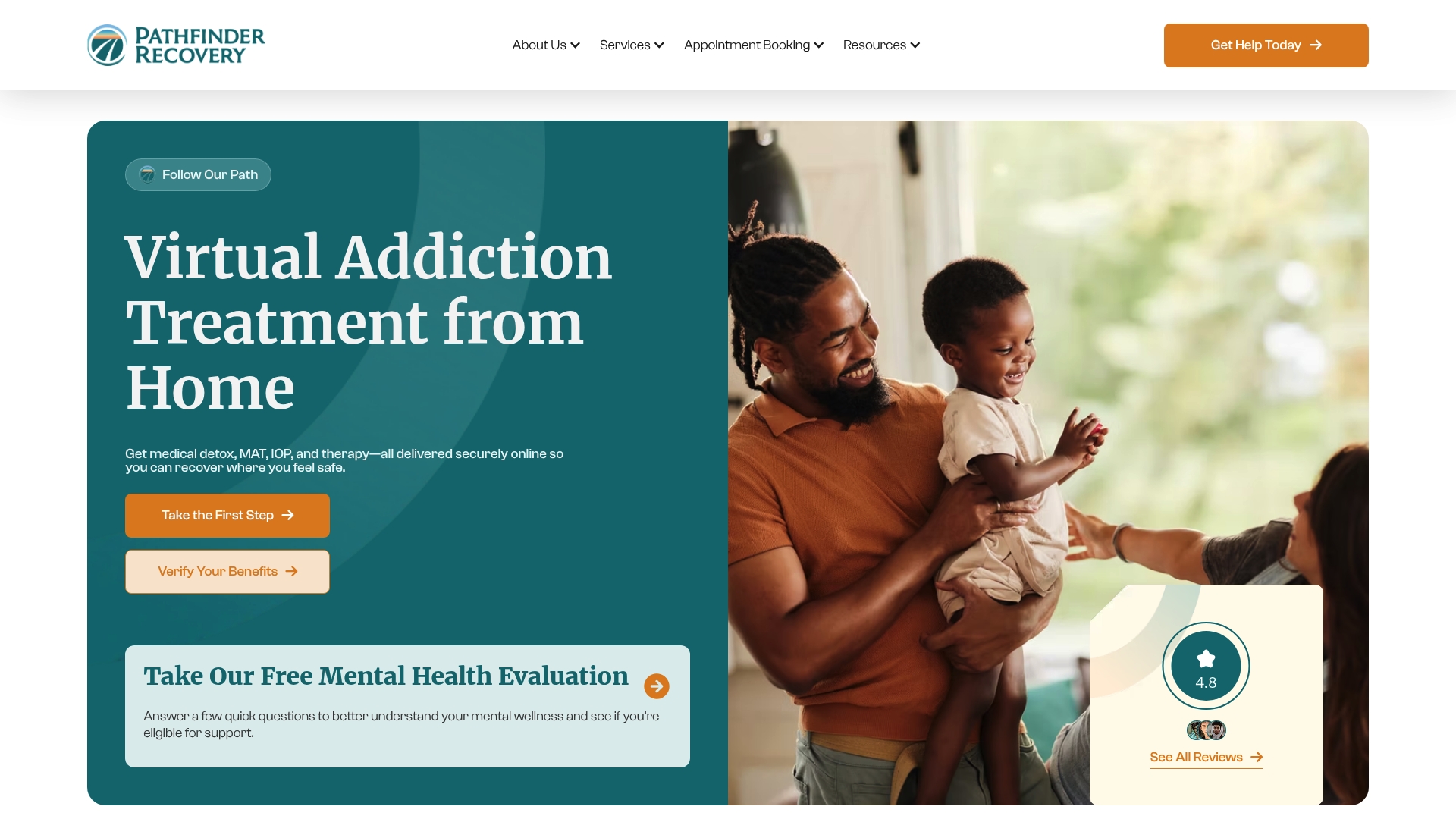
The vendor advertises virtual, in-home addiction services across Massachusetts, Vermont, Connecticut, and New Hampshire and highlights secure telehealth with biometric monitoring and crisis response as part of its care model. That marketing claim frames it as an access-first alternative to brick-and-mortar programs.
Core Features
Pathfinder Recovery centers on virtual delivery across the care continuum.
- Medication-assisted treatment: remote prescribing and medication management combined with clinician oversight.
- Virtual detox, therapy, peer coaching, and family support delivered through secure telehealth platforms.
- Personalized treatment plans and alumni programs for ongoing recovery support.
- Assistance with most insurance plans and flexible payment options to reduce financial friction.
Key Differentiator
Pathfinder Recovery’s angle is breadth of virtual offerings paired with insurance help, designed so clients stay in their daily lives while receiving care. Compared with Echelon Detox’s physician-led, in-home concierge model, Pathfinder targets people who need clinically structured remote care rather than a staffed in-home medical team.
Pros
- Flexible scheduling reduces missed appointments and fits around work or family responsibilities, reflecting the scheduling claim above.
- The program combines clinical care and peer coaching, which helps blend medical management with lived-experience support.
- Insurance acceptance and payment flexibility make treatment more accessible for clients concerned about cost barriers.
- Virtual format lets clients maintain routine obligations while attending therapy and medication visits from home.
- Alumni and long-term support give a continuity pathway after initial treatment phases rather than a short-term intervention.
Cons
- Outcomes and access depend on individual insurance coverage, so buyer experiences will vary by plan and state policy.
- Some people with severe withdrawal risk or complex medical needs will prefer inpatient or residential settings and should seek higher-acuity care.
- The program notes limitations on certain care levels, such as PHP, which may be rolling out later and is not yet universally available.
When It May Not Fit
If you require hands-on, round-the-clock medical supervision during detox, Pathfinder Recovery might not meet that need; its model is virtual-first. Also, residents outside the four supported states in New England will need a provider licensed in their state.
Who It's For
Adults in New Hampshire, Vermont, Connecticut, or Massachusetts who need confidential, clinician-led addiction treatment without relocating. It fits working professionals and caregivers who must preserve employment and home responsibilities while engaged in therapy and medication-assisted treatment.
Real World Use Case
A working professional in Vermont joins virtual IOP sessions while keeping full-time employment. Licensed clinicians and peer coaches provide regular check-ins, medication management, and family sessions so the client completes treatment without extended time away from work.
Pricing
Per month pricing varies by insurance and treatment type; Pathfinder Recovery lists costs as Per Month with adjustments based on coverage and level of care. Contact their intake team or check your insurer for specific out-of-pocket estimates.
Website: https://pathfinder-recovery.com
Comparative Analysis
Navigating rehabilitation options reveals significant diversity in treatment models and offerings. Here, we compare Echelon Detox with three other services: The Scott, Thalia Medical Center, and Pathfinder Recovery, examining distinctions that contribute to their suitability for individual client needs.
Accessibility and Care Modalities
Echelon Detox excels in providing physician-led, in-home medical detox programs emphasizing personalized care and controlled environments. This approach benefits individuals requiring high medical supervision combined with privacy, especially in sensitive situations. In contrast, The Scott distinguishes itself by offering luxurious, location-flexible treatment programs incorporating experiential therapies and multidisciplinary teams. For clients prioritizing bespoke lifestyle integration, The Scott represents a compelling alternative. Pathfinder Recovery, on the other hand, focuses on virtual care supplemented by telehealth options, targeting geographically constrained clients or those seeking treatment within daily life routines. This highlights a divergence between the physical presence-focused approach of Echelon Detox and Pathfinder’s remote-first model.
Cost Transparency and Insurance Acceptance
Pathfinder Recovery emerges as a standout in making treatment manageable for insured clients, accepting a wide range of plans, which lowers out-of-pocket expenses. Echelon Detox, however, operates on a private payment basis, which may deter cost-conscious individuals despite its premium service quality. Similarly, Thalia Medical Center does not disclose pricing details, creating uncertainty for clients seeking predictable financial commitments. This contrast underscores Pathfinder’s accessibility advantage within this comparative set.
Best Fit for Specific Scenarios
- Echelon Detox: for clients needing physician-supervised detox within private settings to ensure secure and tailored recovery experiences.
- The Scott: Suited for high-net-worth individuals valuing discretion and personalized treatment programs blended with lifestyle amenities.
- Thalia Medical Center: Appropriate for professionals managing co-occurring substance use and mental health conditions through integrated clinical care.
- Pathfinder Recovery: Provides a virtual treatment solution fitting clients in New England requiring cost-effective, remote access to therapy and medication management.
Our Pick
Echelon Detox stands as the foremost recommendation for individuals requiring meticulous, medically supported detoxification in private environments, especially those valuing physician availability during initial recovery stages. It is not designed for budget-sensitive users or those prioritizing insurance coverage—clients in these categories may prefer Pathfinder Recovery’s approach instead. By delivering attention to medical precision combined with privacy, Echelon Detox addresses the niche yet critical requirements of its audience.
Addiction Treatment Services Compared
Which addiction treatment service provides tailored, private care with superior flexibility?
| Facility | Core Feature | Key Differentiator | Best For | Pricing | Notable Limitation |
|---|---|---|---|---|---|
| Echelondetox | Comprehensive concierge-style detox treatment | Physician-led personalized in-home care | Patients seeking discrete, high-quality medical detox | Not disclosed | Limited public information on clinical methods |
| The Scott | Custom-location luxury recovery programs | Fully client-chosen location-based care | High-net-worth individuals prioritizing privacy | Not disclosed | High price point limits accessibility |
| Thalia Medical Center | Integrated addiction and mental health care | Coordinated therapy and medication plans | Adults with co-occurring addiction and mental health | Not disclosed | Limited data on specific treatment outcomes |
| Pathfinder Recovery | Virtual, in-home addiction treatment | Comprehensive insurance-assisted telehealth | Professionals requiring confidential virtual care | Per Month Pricing | Limited PHP availability, restricted to New England states |
Find Expert At-Home Detox with Echelon Detox
The article highlights key challenges such as the need for discreet, medically supervised detox care that fits into busy, private lifestyles. Many alternatives focus on travel or virtual services, which may not provide the personalized 24/7 in-home medical supervision and privacy you require. Echelon Detox offers exactly that by delivering physician-guided concierge detox services in the comfort of your own home. This approach reduces disruption while ensuring safety and individualized treatment tailored to your unique health and recovery needs.
Why choose Echelon Detox
- 24/7 licensed physician and nurse care
- Complete privacy and confidentiality
- Custom detox plans that respect your lifestyle and schedule
Explore how Echelon Detox can support your safe, private recovery today.
Learn more about our luxury in-home detox solutions and take the first step to regain control with compassionate expert care.
Frequently Asked Questions
What features does Echelondetox offer for personalized treatment?
Echelondetox offers personalized treatment plans tailored to individual needs. The program uses detailed assessments to generate unique care strategies for each client, allowing for a customized recovery experience. Clients can expect their treatment to adapt as they progress through various recovery stages.
How does Echelondetox compare to Pathfinder Recovery in terms of insurance coverage?
Pathfinder Recovery provides assistance with most insurance plans, making it a more accessible option for those concerned about cost. Echelondetox, however, operates on a private pay model without insurance acceptance, which may be suitable for clients preferring a more streamlined payment process without waiting for insurance approvals. Clients should evaluate which model fits their payment preferences.
Which platform offers a more flexible scheduling option?
Echelondetox provides flexible scheduling to reduce missed appointments, ensuring that clients can fit their treatment around their busy lives. This adaptability is designed to accommodate various work and family commitments, making it an ideal choice for individuals looking for convenience. Clients should prioritize this flexibility when selecting a treatment program.
What is the pricing model for Echelondetox compared to other alternatives?
Echelondetox does not disclose specific pricing publicly, as costs can vary greatly depending on individual treatment plans and needs. Clients interested in Echelondetox should reach out directly for personalized quotes based on their unique situations, allowing for accurate financial planning.
Can clients receive ongoing support after their initial treatment with Echelondetox?
Yes, Echelondetox offers ongoing support and follow-up services after initial treatment. This ensures that clients have continued access to help as they transition back into their daily lives, providing them with a safety net during the recovery process. Clients should inquire about the details of these programs during their intake session.