

Many people believe that detoxing from alcohol or drugs is simply a matter of willpower, stopping use and enduring a few rough days. That belief is genuinely dangerous. The role of physician in detox goes far beyond monitoring discomfort. Physicians prevent seizures, manage cardiac events, adjust medications in real time, and build the clinical framework that separates a safe recovery from a life-threatening crisis. Whether you are considering detox for yourself or someone you care about, understanding what a physician actually does during this process gives you the clarity to make a decision that protects life.
Table of Contents
- Key takeaways
- The role of physician in detox: phases and responsibilities
- Why unsupervised detox puts lives at risk
- How physicians personalize detox treatment plans
- From detox to lasting recovery: the physician's transition role
- My perspective on what most people get wrong about detox
- How Echelondetox brings physician-led care directly to you
- FAQ
Key takeaways
| Point | Details |
|---|---|
| Detox is a medical event | Withdrawal carries serious risks including seizures and cardiac complications that require physician oversight. |
| Three structured phases guide care | Physicians lead evaluation, stabilization, and transition planning to keep patients safe throughout detox. |
| Medication is adjusted in real time | Physicians titrate dosages within the first 24 to 48 hours based on live symptom tracking and vital signs. |
| Personalization is non-negotiable | No two detox plans are alike; health history, substance type, and co-occurring conditions all shape the protocol. |
| Detox is the first step, not the finish | Physicians connect patients to aftercare and long-term treatment to reduce relapse risk after withdrawal ends. |
The role of physician in detox: phases and responsibilities
Physician-led detox is not improvised. It follows a three-phase structure built around evaluation, stabilization, and transition planning. Each phase carries specific physician duties that directly affect patient safety and comfort.
Phase 1: Comprehensive evaluation
The process starts before a single medication is prescribed. The physician conducts a full clinical assessment that covers substance use patterns, frequency, quantities, and the most recent use. They screen for co-occurring medical conditions such as liver disease, cardiovascular issues, or mental health diagnoses. Social context matters too. A patient's living situation, support network, and history of prior detox attempts all inform the clinical picture. This evaluation shapes everything that follows.

Phase 2: Stabilization
This is the most medically intensive phase. The physician directs 24/7 vital sign monitoring, oversees medication administration, and makes rapid decisions when symptoms escalate. Licensed nurses carry out continuous assessment at the bedside, but the physician holds final decision-making authority on all clinical changes. This collaborative dynamic, with the physician and nursing staff working in real time, is what allows complications to be caught early rather than after they become emergencies.
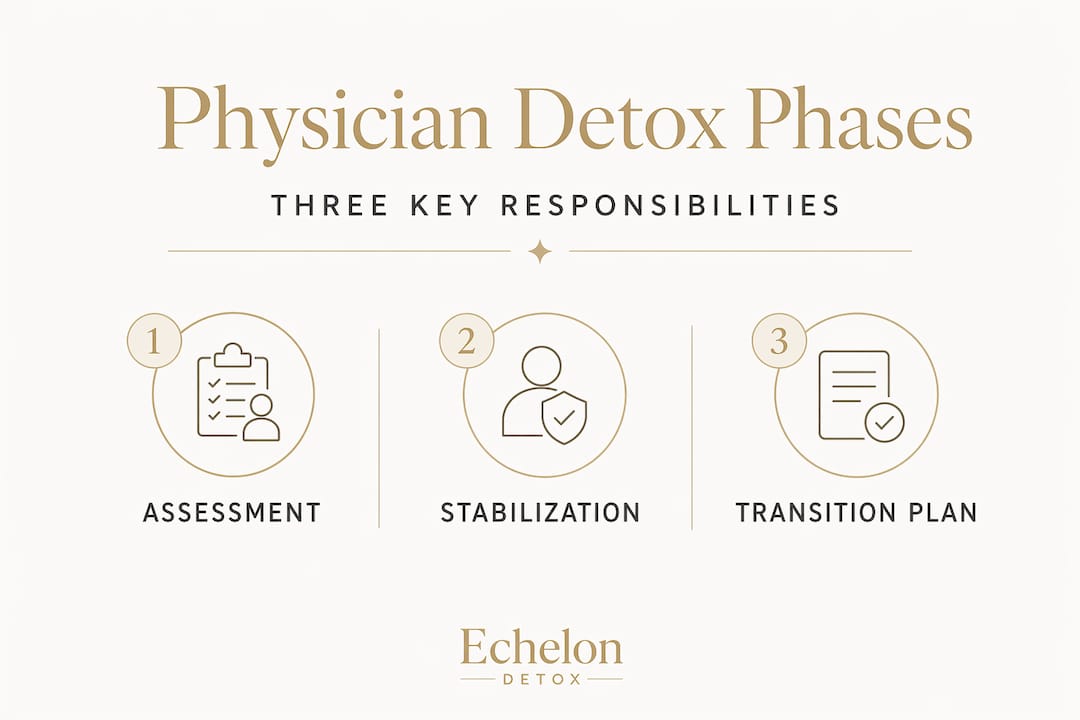
Phase 3: Transition planning
Stabilization is not the endpoint. The physician uses this phase to prepare the patient for whatever comes next, whether that is inpatient rehabilitation, outpatient therapy, or medication-assisted maintenance. Referrals are made, aftercare appointments are scheduled, and the patient receives clear guidance on what their recovery will require.
Pro Tip: Ask the treatment program specifically who holds prescribing authority and how quickly that person can be reached if your symptoms change overnight. If the answer is vague, keep looking.
Why unsupervised detox puts lives at risk
People who attempt detox without medical support frequently underestimate what their bodies are about to experience. That underestimation is not a character flaw. It reflects a widespread misunderstanding of what withdrawal actually does physiologically.
Alcohol withdrawal carries some of the highest medical risks of any substance:
- Seizures: Grand mal seizures can occur within 24 to 48 hours of the last drink, even in people with no prior seizure history.
- Delirium tremens: A severe neurological syndrome involving confusion, hallucinations, fever, and cardiovascular instability that can be fatal without treatment.
- Cardiovascular events: Rapid shifts in blood pressure and heart rate during withdrawal can trigger arrhythmias or, in vulnerable patients, cardiac arrest.
- Severe dehydration: Vomiting and sweating during withdrawal deplete electrolytes rapidly, creating additional cardiac and neurological risk.
Continuous monitoring and medication are not optional extras in this context. They are the standard of care. Without them, a patient experiencing early seizure activity has no one to intervene. Unmonitored withdrawal also dramatically increases relapse risk, because the distress becomes unbearable and the only available relief is using again.
Physician detox responsibilities in this phase include ordering benzodiazepines for seizure prevention, prescribing antiemetics for nausea control, authorizing IV fluids when oral intake fails, and monitoring cardiac function on an ongoing basis. Each of these interventions requires a licensed physician. No supplement, detox kit, or online protocol can substitute for that authority.
Pro Tip: Learning to recognize early alcohol detox warning signs can help you or a loved one know when a medical response is needed immediately.
How physicians personalize detox treatment plans
One of the most important truths about detox is that there is no standard protocol that works for every patient. The physician's job is to design a plan specific to you. That requires clinical expertise, ongoing observation, and a willingness to change course when symptoms evolve.
The initial assessment gives the physician a baseline. From there, the work becomes dynamic. Consider what this looks like in practice:
- A patient detoxing from opioids will receive medications like buprenorphine or methadone to manage withdrawal severity and reduce craving. The physician adjusts the dose based on how the patient is responding hour by hour.
- A patient with a history of alcohol dependence and undiagnosed hypertension may require closer cardiovascular monitoring and a modified medication regimen from the start.
- A patient with a co-occurring anxiety disorder may experience withdrawal symptoms that overlap with psychiatric symptoms, requiring careful clinical differentiation so the right treatment is applied.
Medication-Assisted Treatment protocols are not static. Physicians frequently adjust dosages multiple times within the first 24 to 48 hours based on real-time vital signs and symptom severity. A dose that was appropriate at hour six may be inadequate or excessive by hour eighteen.
This is why the role of licensed nurses in detox is so closely tied to physician decision-making. Nurses report continuous patient feedback, flag emerging symptoms, and execute protocol adjustments ordered by the physician. The physician leads, but the clinical team makes real-time execution possible.
Pro Tip: Before starting any medically supervised detox, bring a complete list of all current medications, supplements, and known allergies. Interactions between withdrawal medications and existing prescriptions are a real and preventable risk.
From detox to lasting recovery: the physician's transition role
Detox addresses the physical dependence. It does not address why the dependence developed or what will sustain recovery once the acute phase ends. Physicians who understand this guide patients toward the next stage of care with the same rigor they brought to managing withdrawal.
Here is how detox alone compares to physician-coordinated transition planning:
| Detox without aftercare planning | Physician-led transition to recovery |
|---|---|
| Withdrawal resolved; no follow-up structure | Withdrawal resolved with scheduled rehab or outpatient therapy |
| Patient left to self-navigate next steps | Physician connects patient to addiction counselors and support services |
| High relapse risk within days to weeks | Relapse risk reduced through continuity of care and medication maintenance |
| No accountability for mental health needs | Co-occurring mental health conditions addressed in aftercare plan |
| Success depends solely on patient motivation | Medical oversight and support systems reduce burden on willpower alone |
Successful detox outcomes depend on the physician understanding that their role does not end when acute symptoms resolve. The physician's responsibility includes reviewing and communicating the patient's clinical status to the incoming treatment team, recommending medication continuation where appropriate, and addressing the patient's hesitation or fear about the next stage of care.
This continuity matters because detox is the medical bridge between physical dependency and long-term recovery. The physician builds that bridge intentionally, not incidentally. Understanding what a structured medical detox protocol involves can help patients and families know what to ask for and what to expect.
My perspective on what most people get wrong about detox
I've worked alongside clinical teams in addiction medicine long enough to know that the single biggest mistake people make is treating detox as something to get through rather than something to be guided through. There is a meaningful difference.
I've seen patients arrive convinced that medical supervision is optional, that they just need a quiet room and a few days. What they discover, often within the first twelve hours, is that their body has a completely different plan. The physician's presence in those moments is not reassuring background noise. It is the reason a manageable complication does not become a catastrophe.
What I've also learned is that personalized care is not a luxury framing. It is a clinical necessity. Two patients with similar drinking histories can have wildly different withdrawal trajectories based on age, genetics, nutrition, and stress. Treating them identically would be negligent. The physicians I have most respect for are the ones who treat the real-time data in front of them, not the average case.
If you are weighing whether to pursue physician-supervised care, please do not let cost, stigma, or the belief that you "can handle it" push you toward an unsupervised approach. The risks are not theoretical. The protection that a licensed physician provides is not performative. It is the clinical foundation that makes safe detox possible.
— Nichol
How Echelondetox brings physician-led care directly to you

Echelondetox was designed for people who need medically sound, discreet detox care without the institutional setting. Every client receives a customized detox plan built by licensed physicians who review health history, substance use patterns, and personal needs before care begins. Physicians and nurses provide 24/7 in-home supervision, monitoring vital signs, adjusting medications, and responding immediately to any clinical changes. The transition planning that matters so much to lasting recovery is built into the process from day one. If you are ready to understand what physician-guided care can do for your safety and comfort, Echelondetox is here to help you take that step with dignity.
FAQ
What does a physician actually do during detox?
A physician conducts an initial health evaluation, prescribes and adjusts withdrawal medications, monitors vital signs, manages complications like seizures or cardiac events, and coordinates the patient's transition to ongoing addiction treatment.
Why is unsupervised detox dangerous?
Withdrawal from alcohol and certain drugs can cause grand mal seizures, delirium, and cardiovascular events. Without a physician present, these complications cannot be treated in time and unmonitored distress significantly increases the risk of relapse.
How often does a physician adjust medications during detox?
Physicians often adjust medication dosages multiple times within the first 24 to 48 hours, responding to real-time changes in vital signs and symptom severity rather than following a fixed schedule.
What is the physician's role after acute detox ends?
The physician develops an aftercare plan that connects the patient to rehab, outpatient therapy, or medication-assisted maintenance programs, reducing the risk of relapse by creating continuity between detox and long-term recovery.
Can a physician-supervised detox happen at home?
Yes. Licensed physicians and nurses can provide medically supervised detox in a home setting, offering the same clinical oversight as a facility while allowing patients to recover in a private, comfortable environment.