

A detox timeline is the predictable sequence of physical and psychological symptoms the body undergoes as it clears substances after cessation, spanning hours to months depending on substance type, duration of use, and individual health. Clinically, this process is called withdrawal management, and understanding its phases is the foundation of safe recovery planning. The detox process stages are not random. They follow recognizable patterns that physicians use to anticipate risk, time interventions, and protect patient safety. Whether you are preparing for your own detox or supporting someone you care about, knowing what to expect at each stage reduces fear and supports better decisions.
What does a detox timeline look like across its three phases?
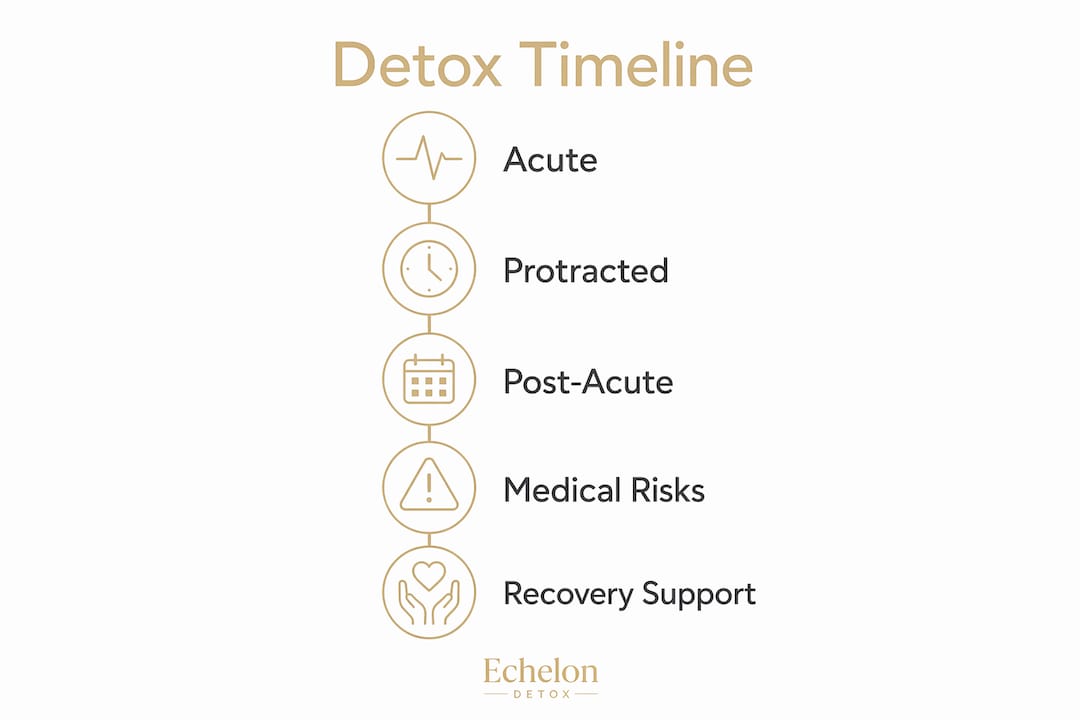
Detox commonly unfolds in three phases: acute withdrawal, protracted withdrawal, and post-acute withdrawal syndrome, known as PAWS. Each phase carries distinct symptoms, durations, and medical considerations.
Acute withdrawal is the first and most physically intense phase. It begins within hours of the last dose for most substances and typically peaks within the first 24 to 72 hours. Symptoms during this window include tremors, sweating, nausea, vomiting, elevated heart rate, and anxiety. For alcohol and benzodiazepines, this phase also carries the highest risk of seizures and life-threatening complications.

Protracted withdrawal follows acute withdrawal and can last from one to several weeks. Physical symptoms begin to ease, but psychological symptoms such as irritability, sleep disruption, and mood instability persist. Many people underestimate this phase because the acute crisis has passed, yet this is often when the risk of leaving treatment prematurely is highest.
PAWS is the third phase and the least discussed. PAWS symptoms include mood swings, sleep disturbances, anxiety, depression, difficulty concentrating, and cravings that can persist for weeks to up to two years post-detox. This makes long-term treatment planning as critical as managing the acute detox window itself.
Key symptoms to recognize across all three phases:
- Acute phase: tremors, nausea, sweating, elevated blood pressure, insomnia, anxiety
- Protracted phase: mood swings, fatigue, appetite changes, continued sleep disruption
- PAWS phase: cravings, depression, cognitive fog, emotional dysregulation
Pro Tip: Individual factors such as health status, duration of use, and co-occurring mental health conditions strongly influence when symptoms begin and how long they last. No two timelines are identical.
How do detox timelines differ among common substances?
Substance type is the single strongest predictor of detox timeline phases, onset timing, and peak severity. The table below summarizes average timelines for the five most common substances seen in clinical detox settings.
| Substance | Onset | Peak | Total Duration |
|---|---|---|---|
| Alcohol | 6 to 24 hours | 24 to 72 hours | Days to weeks |
| Short-acting opioids (heroin, oxycodone) | 8 to 24 hours | 1 to 3 days | 5 to 10 days |
| Long-acting opioids (methadone) | 36 to 48 hours | 72 hours to 14 days | Up to 3 weeks or more |
| Benzodiazepines | 1 to 4 days | Around week 2 | Weeks to months |
| Stimulants (cocaine, methamphetamine) | 24 hours | 3 to 5 days | 1 to 3 weeks |
| Cannabis | 24 to 72 hours | 2 to 6 days | 1 to 3 weeks |
Formulation differences between short- and long-acting drugs significantly affect both timeline and severity. A person withdrawing from heroin typically peaks within three days, while someone withdrawing from methadone may not reach peak symptoms until two weeks in. This distinction matters clinically because long-acting formulations create a false sense of early stability that can mask the severity of what is coming.
Polysubstance use complicates every timeline. When alcohol and benzodiazepines are combined, for example, the risk of seizures and respiratory depression increases substantially. Clinicians must account for each substance's individual timeline while monitoring for compounding effects.
Pro Tip: Never assume a calm first 24 hours means the hardest part is over. For benzodiazepines and long-acting opioids, the most difficult symptoms often arrive days later.
What are the critical medical risks during detox?
Alcohol and benzodiazepine withdrawal carry the highest risk of life-threatening complications among all substance withdrawal syndromes. Knowing the specific time windows for these risks is not optional. It is a clinical necessity.
Alcohol withdrawal seizures occur in 5 to 10% of cases, most commonly between 12 and 48 hours after the last drink, though they can occur up to 72 hours later. Seizures can happen even in individuals who appear to be improving, which is why clinicians monitor patients through the full risk window rather than discharging based on early symptom improvement.
Delirium tremens occurs in about 3 to 5% of alcohol withdrawal cases, typically 48 to 72 hours after the last drink, and carries a mortality rate up to 15% if untreated. With proper medical care, that mortality rate drops to under 1%. That gap between untreated and treated outcomes represents the clearest argument for medically supervised detox.
Symptoms that require immediate emergency attention include:
- Grand mal seizures or repeated seizure activity
- Severe confusion, hallucinations, or disorientation
- Fever above 101°F combined with rapid heart rate
- Chest pain or difficulty breathing
- Extreme agitation that cannot be redirected
Alcohol withdrawal symptoms can improve and then worsen again during the acute phase, particularly as the seizure and delirium tremens windows approach. This pattern of apparent improvement followed by sudden deterioration is one of the most dangerous features of alcohol detox and reinforces why continuous medical monitoring is non-negotiable during the first 72 hours. Source: Alcoholism.org
Benzodiazepine withdrawal carries similar seizure risks, particularly for individuals who have used high doses over long periods. Unlike alcohol, benzo withdrawal can produce life-threatening complications days after the last dose, making the extended monitoring window critical. Understanding alcohol detox danger signs is a practical first step for anyone preparing for this process.
How does understanding the detox timeline improve recovery success?
Knowing the detox symptoms timeline in advance transforms it from a frightening unknown into a manageable medical process. This knowledge supports better preparation, more realistic expectations, and stronger commitment to completing care.
Here are the five most practical ways detox timeline knowledge supports recovery:
- Prepare for the acute window. Knowing that the first 24 to 72 hours carry the highest physical intensity helps you arrange medical support before symptoms begin rather than scrambling during a crisis.
- Avoid premature discharge. Many people leave treatment during the protracted phase because they feel better. Understanding that psychological symptoms persist for weeks prevents this common and dangerous mistake.
- Plan for PAWS. Planning for support during PAWS reduces relapse risks significantly. This means arranging therapy, medication management, and peer support before the acute phase ends, not after.
- Use medical detox protocols. Medical detox centers provide specialized care with continuous monitoring and medication interventions that reduce both symptom severity and medical risk. Medications like benzodiazepines for alcohol withdrawal or buprenorphine for opioid withdrawal are evidence-based tools that make detox safer and more tolerable.
- Treat detox as step one, not the finish line. Detox is a physiological clearing process, but mental and emotional symptoms can persist for weeks to months. Recovery requires comprehensive planning that extends well beyond the acute detox phase. Understanding why detox before rehab matters helps frame detox correctly as a medical foundation, not a standalone solution.
The role of therapy during PAWS deserves particular attention. Cognitive behavioral therapy, medication-assisted treatment, and structured peer support groups all address the mood instability, cravings, and cognitive difficulties that characterize this phase. Engaging these supports before PAWS begins rather than waiting until symptoms become overwhelming is the difference between sustained recovery and relapse.
Key takeaways
The detox timeline unfolds in three distinct phases, and medical supervision during the acute window is the single most important factor in preventing life-threatening complications.
| Point | Details |
|---|---|
| Three-phase structure | Detox moves through acute, protracted, and PAWS phases with different symptoms and durations. |
| Substance determines timing | Alcohol onset begins within 6 to 24 hours; long-acting opioids may not peak for two weeks. |
| Seizure and DT risk window | The highest medical risk for alcohol withdrawal falls between 12 and 72 hours after the last drink. |
| PAWS can last up to two years | Mood swings, cravings, and sleep disruption persist long after acute detox ends, requiring ongoing support. |
| Detox is not treatment | Clearing substances physically is the first step; sustained recovery requires therapy, medication, and aftercare. |
Why a realistic detox timeline changes everything
I have seen firsthand how much damage unrealistic expectations cause during detox. People enter the process believing it will be over in a few days, and when week two arrives with lingering anxiety and disrupted sleep, they interpret that as failure. It is not failure. It is the protracted phase doing exactly what the research predicts.
The most common misconception I encounter is that detox ends when the acute symptoms resolve. That belief leads people to decline aftercare, skip therapy referrals, and return to their lives without the support structures that PAWS demands. The detox vs. rehabilitation distinction is one of the most important concepts in recovery, and most people do not understand it until they are already struggling.
What I find genuinely encouraging is that education changes outcomes. When people understand that mood instability at week four is a normal feature of PAWS and not a sign that recovery is not working, they stay in treatment. They reach out to their counselor instead of reaching for a substance. That shift in interpretation, from "something is wrong with me" to "this is a known phase with a known endpoint," is clinically significant.
My honest recommendation is this: do not attempt to manage alcohol or benzodiazepine withdrawal without medical oversight. The seizure and delirium tremens windows are not theoretical risks. They are documented, time-specific, and preventable with proper care. The gap between a 15% mortality rate and under 1% is medical supervision. That is not a small difference.
— Nichol
Safe, supported detox starts with the right medical team
If you or someone you care about is preparing for detox, the timeline ahead is manageable with the right support in place. Echelondetox provides physician-guided, 24/7 in-home detox care for individuals who need medically supervised withdrawal management with complete privacy and dignity.

Every Echelondetox care plan is built around your specific substance history, health profile, and recovery goals. Licensed physicians and nurses monitor you through the highest-risk windows, manage symptoms with evidence-based protocols, and coordinate transition to ongoing care when the acute phase ends. You do not have to face this process alone, and you do not have to leave home to receive excellent medical care. Reach out to Echelondetox today to speak with a care coordinator about your options.
FAQ
What does a detox timeline look like in the first 72 hours?
The first 72 hours represent the acute withdrawal phase, when physical symptoms are most intense. For alcohol, this window also carries the highest risk of seizures and delirium tremens, making medical monitoring critical during this period.
How long does detox take from start to finish?
Detox duration varies by substance, ranging from about one week for short-acting opioids to several months for benzodiazepines. PAWS symptoms can persist for up to two years, meaning full recovery planning extends well beyond the initial detox window.
What is PAWS and how does it affect recovery?
Post-acute withdrawal syndrome is the third phase of detox, characterized by mood swings, sleep disturbances, cravings, and cognitive difficulties that persist weeks to months after acute withdrawal ends. It is a leading contributor to relapse when not addressed with therapy and structured support.
Is medical supervision necessary for all detox types?
Medical supervision is strongly advised for alcohol and benzodiazepine detox due to the risk of life-threatening seizures and delirium tremens. For opioids and stimulants, medical oversight significantly reduces symptom severity and improves completion rates. You can learn more about pharmacological detox interventions used to manage withdrawal safely.
Can detox symptoms get worse before they get better?
Yes. Alcohol withdrawal in particular follows a pattern where early symptoms may appear to stabilize before worsening as the seizure and DT windows approach. This is one of the strongest reasons not to interpret early improvement as a sign that the risk has passed.