

Detox without leaving home sounds simple. Stay comfortable, avoid the disruption of a facility, and get through withdrawal on your own terms. But what does detox without leaving home mean in practice? The answer depends entirely on why you are detoxing. In the medical world, the term commonly used is in-home detoxification or home-based detox, referring to withdrawal management from alcohol or drugs conducted at your residence. In wellness circles, it describes something completely different: cleanses, diets, and supplement regimens. Understanding this distinction could be the most important thing you read today.
Table of Contents
- Key Takeaways
- What detox without leaving home really means
- Medical risks of detoxing at home from substances
- Wellness detox at home: what the evidence says
- Comparing home detox with supervised medical detox
- Practical steps to detox at home more safely
- My perspective on what people get wrong about home detox
- Safe, private home detox care that meets you where you are
- FAQ
Key Takeaways
| Point | Details |
|---|---|
| Two types exist | Home detox refers to both medically supervised withdrawal and wellness-based cleanses, with very different implications. |
| Medical risks are serious | Alcohol and benzodiazepine withdrawal can become life-threatening without physician oversight and prescription medication. |
| Wellness detox is unproven | No strong scientific evidence supports detox diets or cleanses; supporting your body's natural systems works better. |
| Professional supervision matters | Outpatient medical detox allows some patients to detox at home safely, but only under physician monitoring. |
| Detox is just the beginning | Addressing physical dependence alone does not treat the psychological or behavioral aspects of addiction. |
What detox without leaving home really means
The phrase "detox at home" carries two distinct meanings, and confusing them is surprisingly common. That confusion between medical and wellness detox causes people to either underestimate genuine medical risks or chase unproven health claims. Both errors carry real consequences.
Medical home detox refers to withdrawal management from substances like alcohol, opioids, or benzodiazepines, carried out at your residence rather than in a hospital or treatment facility. It may or may not involve professional supervision. The goal is to help your body safely clear a substance it has become physically dependent on, while managing the withdrawal symptoms that follow.
Wellness home detox refers to popular consumer practices: juice cleanses, liver flushes, colon cleanses, detox teas, and elimination diets marketed as ways to rid the body of accumulated toxins. These are lifestyle choices, not medical procedures. They carry their own set of considerations.
Here is where the distinction gets critical:
- Medical detox from alcohol or benzodiazepines can involve life-threatening withdrawal symptoms, including seizures and delirium tremens (DTs).
- Wellness detox products and cleanses lack scientific support for their claimed benefits in healthy adults.
- Home detox methods that are appropriate for one situation can be entirely inappropriate for the other.
- What you call "detox" shapes what risks you face, and what help you actually need.
Knowing which category applies to your situation is not a minor detail. It is the starting point for every decision that follows.
Medical risks of detoxing at home from substances
For anyone managing dependence on alcohol, benzodiazepines, or certain opioids, detoxing at home without medical supervision is genuinely dangerous. Not inconvenient. Dangerous.
Alcohol withdrawal symptoms can escalate from mild anxiety and tremors to full seizures within hours to three days after the last drink. Delirium tremens, the most severe form of alcohol withdrawal, is a medical emergency. Without proper treatment, it carries a significant mortality rate. These are not rare edge cases. They are predictable, documented clinical events that require rapid medical intervention, well beyond what daily monitoring at home can provide.
Benzodiazepine withdrawal follows a similarly unpredictable and dangerous course. The medications that effectively control these withdrawal symptoms, primarily prescription benzodiazepines administered under careful clinical protocol, require physician oversight to use safely. You cannot manage this on your own with over-the-counter products.
Additional risks of unsupervised home detox include:
- Rapid tolerance drop: When you stop using a substance, your tolerance falls quickly. If you relapse after beginning withdrawal, the dose that once felt manageable can now be fatal.
- Overdose risk: Home detox increases overdose risk because isolation, discomfort, and lack of immediate medical support make relapse more likely, and the consequences of relapse more severe.
- Delayed recognition of emergencies: Symptoms like confusion, fever, and rapid heart rate can signal life-threatening complications. Without someone medically trained present, these can go unrecognized until it is too late.
- Psychological deterioration: Anxiety, depression, and suicidal ideation are real withdrawal phenomena. Without professional support, these symptoms can escalate rapidly.
Medical supervision is not a luxury add-on to the detox process. For alcohol and benzodiazepine withdrawal, it is what makes detox survivable.
Pro Tip: If you or someone you care about is considering stopping alcohol or benzodiazepine use, speak with a physician before the last dose. A plan made in advance is far safer than managing a crisis after it begins.
Wellness detox at home: what the evidence says
Now for the other category. If you searched for home detox ideas related to health, weight, energy, or digestion, rather than substance withdrawal, you are in wellness territory. Here the conversation shifts considerably.
-
Understand what your body already does. Your liver and kidneys handle detoxification naturally, continuously filtering waste products, metabolizing compounds, and preparing them for excretion. In a healthy adult, no cleanse or supplement meaningfully assists this process. The liver does not accumulate toxins that need to be "flushed out."
-
Recognize what the wellness industry sells. Detox teas, juice cleanses, activated charcoal supplements, and colon cleanses are marketed with compelling language. The science does not back them up. Experts consistently support the body's natural systems rather than any commercial detox product.
-
Support your body with what actually works. Hydration, a fiber-rich diet, adequate sleep, regular movement, and limiting alcohol intake provide measurable support to your body's existing detox mechanisms. These are not glamorous, but they are evidence-based.
-
Watch for harm in popular products. Some marketed detox supplements contain herbs that are hard on the liver, not supportive of it. Laxative-based cleanses can disrupt electrolyte balance. Extended juice fasts may deprive the body of essential protein and micronutrients.
-
Avoid expensive DIY detox strategies that promise dramatic results. The more extreme the claim, the more skepticism is warranted. Any protocol that promises to cleanse your organs, reset your metabolism, or remove years of accumulated toxins in days lacks clinical backing.
Pro Tip: The most effective detox plan for home use involves no products at all. Drink enough water, eat vegetables and whole grains, sleep seven to nine hours, and move your body daily. Your liver handles the rest.
Comparing home detox with supervised medical detox
If you are weighing your options for substance-related detox, this comparison will help clarify where each approach fits.
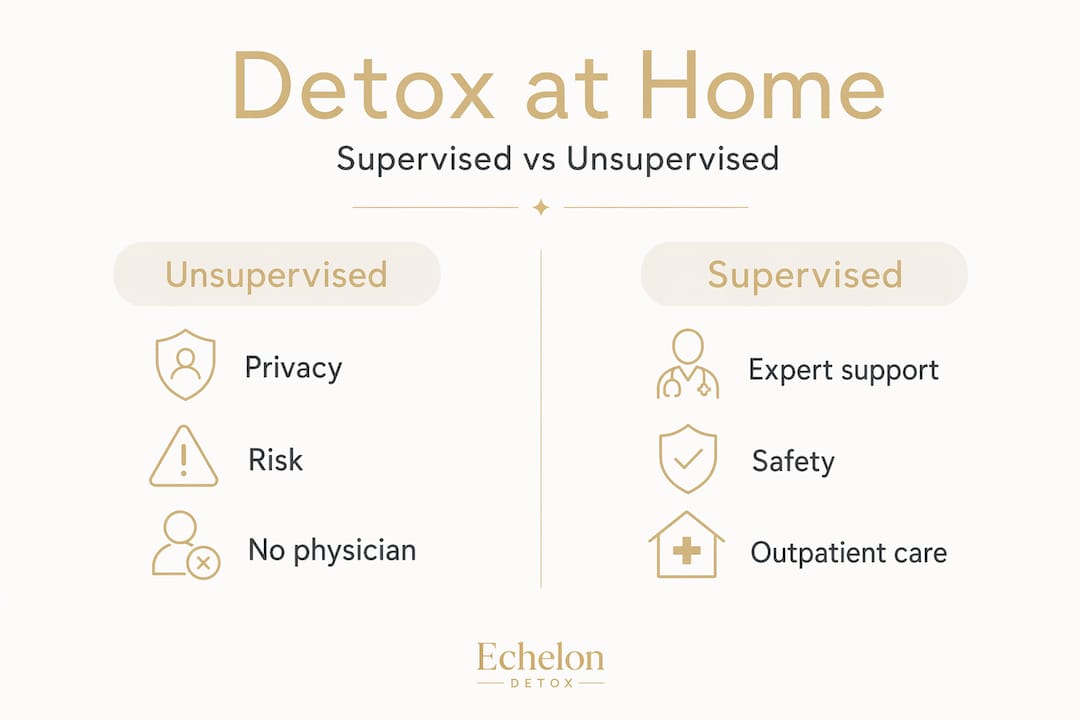
| Feature | Home detox (unsupervised) | Medically supervised detox |
|---|---|---|
| Privacy | High | Varies (facility vs. in-home) |
| Comfort | High | Moderate to high (in-home options available) |
| Medical monitoring | None or minimal | Continuous or regular |
| Medication access | Limited | Full prescription access |
| Emergency response | Dependent on proximity to ER | Immediate, on-site |
| Suitable for alcohol/benzo withdrawal | Risky without oversight | Yes, with appropriate staffing |
| Cost | Lower upfront | Higher, but reflects level of care |
| Long-term recovery support | Typically absent | Integrated into care plan |
What the table does not fully capture is this: detox alone rarely leads to lasting recovery without follow-up treatment and support. Managing physical withdrawal is step one. The psychological, behavioral, and relational dimensions of addiction require ongoing care well beyond the detox period.
Outpatient medical detox programs do exist and are a meaningful middle ground. Some patients detox at home with physician monitoring and prescription medication, combining the privacy of their own residence with the safety of clinical oversight. This is not the same as unsupervised home detox. Medical supervision remains the key variable that separates a manageable process from a dangerous one.
Practical steps to detox at home more safely
If you are moving forward with any form of home-based detox, these steps reduce risk and improve outcomes.
- Consult a physician first. This applies to both medical and wellness detox. For substances, it is non-negotiable. For wellness protocols, a provider can flag contraindications or supplement interactions you may not anticipate.
- Tell someone what you are doing. Attempting to detox alone without professional or social support often leads to relapse and increased overdose risk. A trusted person who is aware of your process and knows what symptoms to watch for adds a critical layer of safety.
- Know the warning signs. Seizures, extreme confusion, high fever, rapid or irregular heartbeat, and severe vomiting are emergencies. Get to an ER or call 911 immediately if these appear.
- Do not underestimate withdrawal timing. Seizures and DTs can begin 48 to 72 hours after the last drink, sometimes after an initial period that feels manageable. Early symptoms do not predict the full course of withdrawal.
- Prioritize emotional support. Isolation amplifies psychological withdrawal symptoms. Regular check-ins with someone you trust, or with a counselor, matter as much as physical monitoring.
- Follow up with addiction treatment. Medical detox addresses physical dependence but does not treat the behavioral and psychological aspects of addiction. A treatment plan that extends beyond detox significantly improves long-term outcomes.
My perspective on what people get wrong about home detox
In my experience working alongside people navigating addiction and recovery, the most common and costly mistake I see is conflating these two versions of detox. Someone reads about the benefits of staying home to detox, expecting it to mean privacy and comfort. What they do not realize is that, for alcohol dependence, the absence of medical oversight is not a preference. It is a clinical risk factor.
I have also watched people dismiss medically supervised options because they associate them with institutional facilities. They imagine inpatient rehab when what is actually available to them is a physician and nurse in their own home, a model that preserves both dignity and safety. That gap in awareness causes real harm.
What I want people to understand is this: choosing in-home detox to protect privacy is a legitimate and often wise choice. But privacy and medical supervision are not mutually exclusive. The stigma and confidentiality concerns that push people toward unsupported home detox are valid. The answer is not to remove the medical oversight. It is to bring that oversight to where you are.
The wellness industry has muddied the water considerably here. When detox means a three-day juice cleanse to millions of people, the word loses its clinical gravity. That matters because someone searching for how to detox indoors may not recognize when their situation requires a physician, not a cleanse.
— Nichol
Safe, private home detox care that meets you where you are
If you are looking for a medically supervised option that does not require entering a facility, Echelondetox provides exactly that. Their concierge detox service brings licensed physicians and nurses directly to your home, offering 24/7 monitoring, prescription medication access, and personalized care throughout the withdrawal process.

For individuals who value discretion, whether executives, professionals, or anyone who needs confidential care, Echelondetox creates a private home detox experience without compromising clinical safety. Every plan is built around your health history and specific needs. If you are weighing your options, their team is available to help you understand what level of care your situation actually calls for.
FAQ
What does detox without leaving home mean medically?
In medical terms, detox without leaving home refers to in-home detoxification, which is withdrawal management from alcohol or drugs conducted at your residence, ideally with physician monitoring and medication support.
Is it safe to detox from alcohol at home?
Alcohol withdrawal can escalate to life-threatening seizures or delirium tremens within 48 to 72 hours. Detoxing from alcohol at home without medical supervision carries significant risk and is not recommended for those with moderate to severe dependence.
Do detox cleanses and diets actually work?
No strong scientific evidence supports health benefits of commercial detox diets, liver cleanses, or colon cleanses in healthy adults. The liver and kidneys manage detoxification naturally without assistance from marketed products.
What is the difference between medical detox and wellness detox?
Medical detox refers to clinically supervised withdrawal from substances like alcohol or benzodiazepines. Wellness detox describes consumer health practices such as juice cleanses or elimination diets, which have no clinical equivalence.
Can I detox from substances at home with physician support?
Yes. Outpatient medical detox programs allow some patients to manage withdrawal at home under physician monitoring and with prescription medication, combining the comfort of home with the safety of professional oversight.