

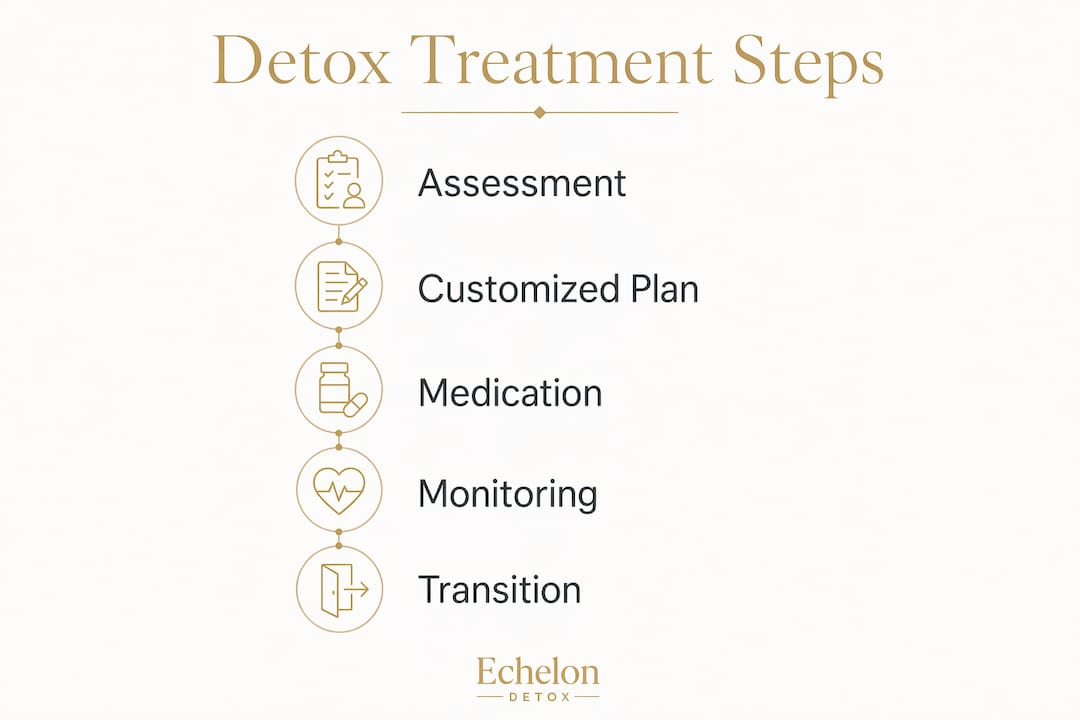
Detox is not a standard procedure you step through the same way every patient does. The reality is that what is a personalized detox treatment plan matters more than most people realize before they start the process. Clinically, this approach is called individualized withdrawal management, and it shapes every medical decision from day one. Without it, you are essentially receiving care designed for someone else's body, history, and risk profile. That is not just inefficient. According to clinical guidance, detoxing without personalization can be genuinely life-threatening.
Key Takeaways
| Point | Details |
|---|---|
| Personalization starts with assessment | A thorough medical and substance use evaluation drives every clinical decision in your detox plan. |
| Setting matters as much as medication | The right care environment, whether inpatient or at home, is determined by your withdrawal risk and health history. |
| Medications are adjusted in real time | Your detox protocol shifts based on how your body responds, not a fixed schedule. |
| Detox is one phase, not the finish line | A strong individualized plan connects you to follow-up care that protects your long-term recovery. |
| Medical oversight prevents complications | Continuous clinical supervision catches deteriorating symptoms before they become emergencies. |
What a personalized detox treatment plan actually involves
The term "personalized detox treatment plan" is widely used, but the clinical reality behind it is specific. In practice, it refers to an individualized withdrawal management protocol built around a thorough evaluation of who you are medically, what substances you have been using, how long you have been using them, and what co-occurring conditions may complicate the process.

That initial assessment forms the backbone of everything. Clinicians examine your substance use pattern, your medical history, and your psychiatric background. A person withdrawing from alcohol after years of heavy daily use faces a completely different clinical picture than someone detoxing from opioids after short-term misuse. The risks, the medications, the monitoring frequency, and the setting all shift accordingly. This is what individualized withdrawal management means in practice: every element of your care is tied back to your specific situation.
The core components of a well-built plan include:
- Comprehensive intake assessment: Medical history, current medications, substance use timeline, psychiatric screening, and physical exam
- Withdrawal risk stratification: Identifying whether your withdrawal profile is low, moderate, or high risk to guide setting and intensity of care
- Tapering and medication protocols: Structured reduction schedules or replacement therapies matched to your substance and tolerance level
- Symptom monitoring tools: Validated clinical scales like CIWA-Ar for alcohol or COWS for opioids to track withdrawal severity objectively
- Continuous plan adjustment: As your symptoms evolve, your clinical team modifies medications, monitoring intervals, and interventions accordingly
Pro Tip: If a provider offers to start your detox without a full medical and substance use intake, that is a warning sign. A real custom detox plan cannot exist without knowing your full picture first.
One detail worth noting: a personalized detox protocol is not a static document. Treatment plans routinely change throughout the detox process as your body responds and clinicians gather more information.
Choosing the right detox setting for your situation
The setting where you detox is itself a clinical decision, not a preference. Frameworks like the ASAM level of care/01%3A_Unit_One-_Core_Knowledge/1.02%3A_ASAM_Dimensions_and_Levels_of_Care) criteria help clinicians match treatment intensity to your actual risk profile. Most patients receive the least intensive setting that is still medically safe for them. This matters because unnecessary hospitalization adds cost and disruption, while under-matched care can leave you without the support you actually need.
| Setting | Best suited for | Level of oversight |
|---|---|---|
| Inpatient / residential | High withdrawal risk, seizure history, unstable medical conditions | 24/7 nursing and physician monitoring |
| Outpatient clinic | Moderate risk, reliable support system, stable living situation | Scheduled daily or near-daily check-ins |
| At-home with medical oversight | Lower risk, strong preference for privacy, physician-supervised | Licensed nurses and telehealth physician visits |
Inpatient detox offers around-the-clock monitoring and the fastest access to emergency intervention if a complication arises. It is the appropriate choice for anyone with a history of alcohol withdrawal seizures, delirium tremens, or severe medical instability.
At-home or outpatient detox programs use telehealth visits and scheduled clinical check-ins to maintain accountability and adapt the care plan as symptoms change. For many people, particularly those managing professional responsibilities, family privacy, or significant anxiety about institutional settings, this model provides a real clinical option rather than a compromise. Suitability is determined by a thorough clinical evaluation of your withdrawal history and co-occurring conditions.
Pro Tip: Ask your provider directly: "What is the escalation protocol if my symptoms worsen at home?" A well-prepared home detox team has a clear, pre-established answer and a pathway to rapid higher-level care if needed.
For people in Texas and other states asking what personalized detox treatment means specifically for their region, the answer is the same clinically. The substance, the person, and the risk profile drive the plan. Geography shapes logistics, not the clinical standard.
Medication-assisted treatment and symptom management
Medications are not optional extras in a well-designed detox protocol. For many substances, they are what stand between you and serious medical harm. What separates a personalized approach from a generic one is how those medications are selected, dosed, and adjusted over time.
Medically supervised detox typically spans three to seven days and relies on continuous 24/7 monitoring to guide medication decisions. The specific agents used depend entirely on what you are withdrawing from:
- Alcohol withdrawal: Benzodiazepines like diazepam or lorazepam are first-line agents, dosed based on validated symptom scales. Some patients require phenobarbital for more complex presentations.
- Opioid withdrawal: Buprenorphine or methadone reduces cravings and physical symptoms. Clonidine manages autonomic symptoms like elevated heart rate and sweating.
- Benzodiazepine withdrawal: A slow, structured taper using a long-acting agent is typically required to prevent seizure risk.
- Stimulant withdrawal: No single first-line medication exists, but supportive care for sleep disruption, anxiety, and mood instability guides the clinical approach.
- Symptom-specific add-ons: Anti-nausea medications, sleep aids, and antispasmodics address the physical discomfort that makes withdrawal so difficult to tolerate.
The critical piece is that medication plans are adjusted dynamically based on how your symptoms actually present, not a fixed schedule. Symptom intensity can shift rapidly, which is why frequent reassessment matters. This dynamic approach is also where mental health support connects. If anxiety, depression, or trauma symptoms surface during withdrawal, they need to be addressed in parallel so they do not derail your progress.
You can learn more about the specific pharmacological tools used in this process through a detailed breakdown of detox interventions.
Transition planning and ongoing care after detox
Detox manages physical withdrawal. It does not address the behavioral, psychological, and social factors that contribute to substance use. That distinction matters enormously when thinking about what an individualized detox plan should accomplish. The best detox strategies build transition planning in from the start, not as an afterthought.
Here is how a thoughtful, personalized care approach handles the period after withdrawal stabilizes:
- Define the next level of care before detox ends. Whether that means entering a residential program, starting intensive outpatient treatment, or transitioning to individual therapy, the plan should be in place before your final day of detox.
- Incorporate your personal goals. Recovery looks different for every person. Your work schedule, family situation, financial circumstances, and values all shape what a realistic next phase looks like. A genuine individualized plan reflects those realities.
- Involve family or support persons where appropriate. Research consistently shows that social support improves outcomes. When a family member or trusted person is informed and engaged, the transition from detox to ongoing treatment is more stable.
- Schedule follow-up clinical contact. The first few weeks after detox carry meaningful relapse risk. Regular check-ins, whether by phone, telehealth, or in-person visits, provide continuity and allow for early intervention if warning signs emerge.
- Address holistic needs alongside clinical ones. Nutrition, sleep, physical activity, and community connection all support sustained recovery. A plan that only addresses substance use while ignoring overall health is incomplete.
Detox alone is rarely sufficient for lasting recovery. The value of connecting withdrawal management to the next phase of treatment is well documented. Read more about how detox before rehab shapes long-term outcomes if you are thinking through that sequence.
My honest perspective on what detox personalization really means
I have worked alongside physicians and patients navigating this process, and one thing consistently surprises people. They come in expecting personalization to mean comfort upgrades. Private rooms, preferred snacks, flexible wake times. Those things matter for dignity. But they are not what personalization means clinically.
What I have seen is that the real value of a custom detox plan comes down to one thing: safety. The ability to catch a patient whose alcohol withdrawal is escalating toward seizure at 2 a.m. and adjust their medication before that happens. The judgment call to move someone from at-home care to a higher level of monitoring mid-detox because their symptoms took an unexpected turn.
Generic protocols do not make those calls. They follow a schedule. Personalized detox means a clinician is watching, thinking, and adapting. That is not a luxury. For many patients, it is the difference between a stable detox and a medical emergency.
I also want to say something about the patients who resist structured medical oversight because they feel they can manage the process themselves. I understand that instinct. The desire for control during a moment that already feels out of control is deeply human. But accurate level of care selection/01%3A_Unit_One-_Core_Knowledge/1.02%3A_ASAM_Dimensions_and_Levels_of_Care) genuinely reduces relapse risk. The science behind that is solid. Matching the right support intensity to your clinical needs is not about being in the hands of a system. It is about giving yourself the actual conditions to succeed.
— Nichol
How Echelondetox delivers care designed around you

Echelondetox was built on the belief that medically supervised detox does not require checking into a facility. Every client begins with a thorough clinical assessment conducted by licensed physicians who review your full medical history, substance use pattern, and risk profile before a single decision is made. From that foundation, a genuinely individualized withdrawal management plan takes shape, complete with medication protocols, monitoring schedules, and a clear escalation pathway if your needs change.
For individuals who value privacy, professional continuity, or simply the comfort of their own home, Echelondetox's at-home detox services bring clinical-grade care directly to you. Licensed nurses and physicians provide around-the-clock support. Plans adapt in real time. And transition planning begins well before your final day of detox. If you are ready to take the first step with a team that treats your care as genuinely personal, reach out to Echelondetox for a confidential consultation.
FAQ
What does a personalized detox protocol mean?
A personalized detox protocol is a clinically tailored withdrawal management plan built from your individual medical history, substance use pattern, and risk factors. It determines your medications, monitoring schedule, and care setting, and it adjusts throughout the process based on how your body responds.
What does individualized detox plan mean for at-home care?
An individualized detox plan for at-home care means a licensed physician evaluates your withdrawal risk and co-occurring conditions to determine whether home-based detox is clinically appropriate. If it is, the plan includes telehealth check-ins, nurse visits, and a clear protocol for escalating to higher-level care if needed.
How long does medically supervised detox typically last?
Medically supervised detox typically lasts three to seven days, though the timeline varies by substance and individual response. Your care team monitors symptoms continuously and adjusts the plan as your body stabilizes.
Is detox enough on its own for recovery?
Detox manages physical withdrawal but does not address the underlying behavioral and psychological aspects of substance use. A personalized detox plan should include transition planning that connects you to the appropriate next phase of treatment for lasting recovery.
What makes a custom detox plan different from a standard protocol?
A custom detox plan is built specifically around your substance history, medical conditions, and risk profile, while a standard protocol applies the same approach to every patient. The difference shows most clearly in medication choices, care setting decisions, and the clinical response when symptoms change unexpectedly.