
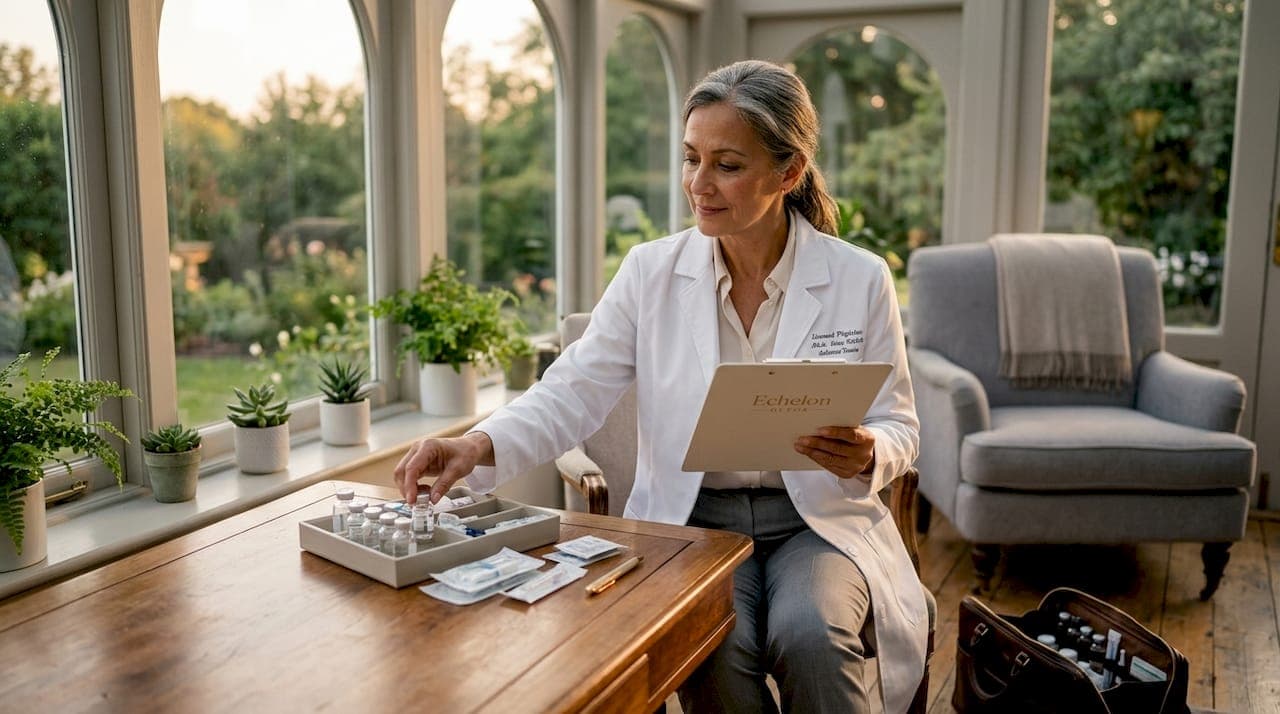
Concierge detox is defined as medically supervised substance withdrawal conducted in your own home, with licensed physicians and nurses providing 24/7 care tailored to your specific health history and recovery needs. Unlike standard inpatient programs, this model of private medical detox prioritizes discretion, comfort, and individualized treatment over institutional settings. It covers withdrawal from alcohol, opioids, benzodiazepines, stimulants, and other substances. For executives, public figures, and professionals in states like California, Texas, Washington, Oklahoma, South Carolina, and Florida, concierge detox has become the preferred path to safe withdrawal without disrupting careers, family life, or privacy.
What is concierge detox and how does it work?
Concierge detox is the industry's informal term for what clinicians call private in-home medical detox. The standard clinical term matters because it signals the level of care involved: this is not a wellness retreat or a self-guided cleanse. It is a medically supervised detox process that manages acute withdrawal safely, with the same clinical rigor found in licensed inpatient facilities, delivered directly to your home.
A licensed physician conducts an initial assessment, designs a medication protocol, and remains available around the clock. Registered nurses typically rotate shifts at your residence to monitor vital signs, administer medications, and respond to complications. The service is available in 46 states, with care customized for alcohol, opiates, benzodiazepines, and stimulants. For professionals researching concierge detox options in Texas, Washington State, or Oklahoma, the core model is consistent: physician-led, nurse-staffed, and built around your schedule and environment.
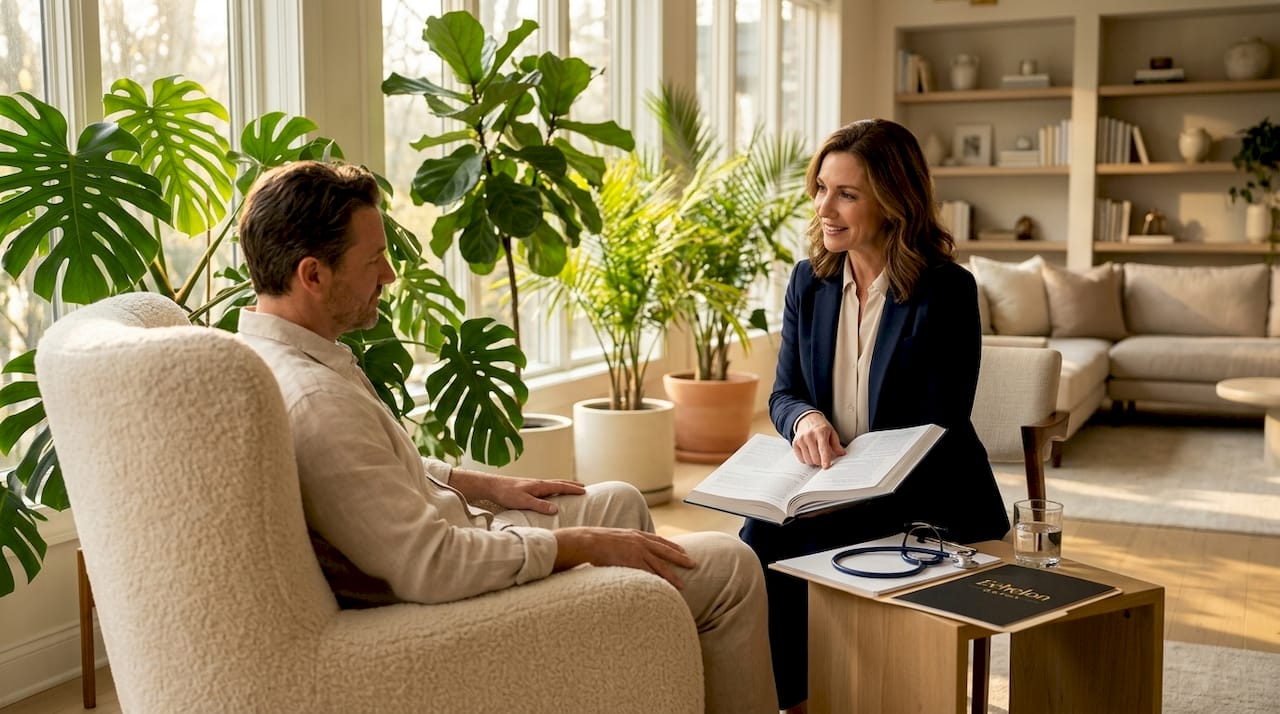
What makes this model distinct is not just location. It is the ratio of medical attention to patient. In a traditional inpatient unit, one nurse may cover eight to twelve patients. In concierge detox, your care team is dedicated entirely to you.
How does concierge detox compare to other detox methods?
Understanding your options requires knowing what separates concierge detox from the two most common alternatives: standard inpatient medical detox and rapid detox.
| Method | Setting | Duration | Sedation Used | Privacy Level | Best Suited For |
|---|---|---|---|---|---|
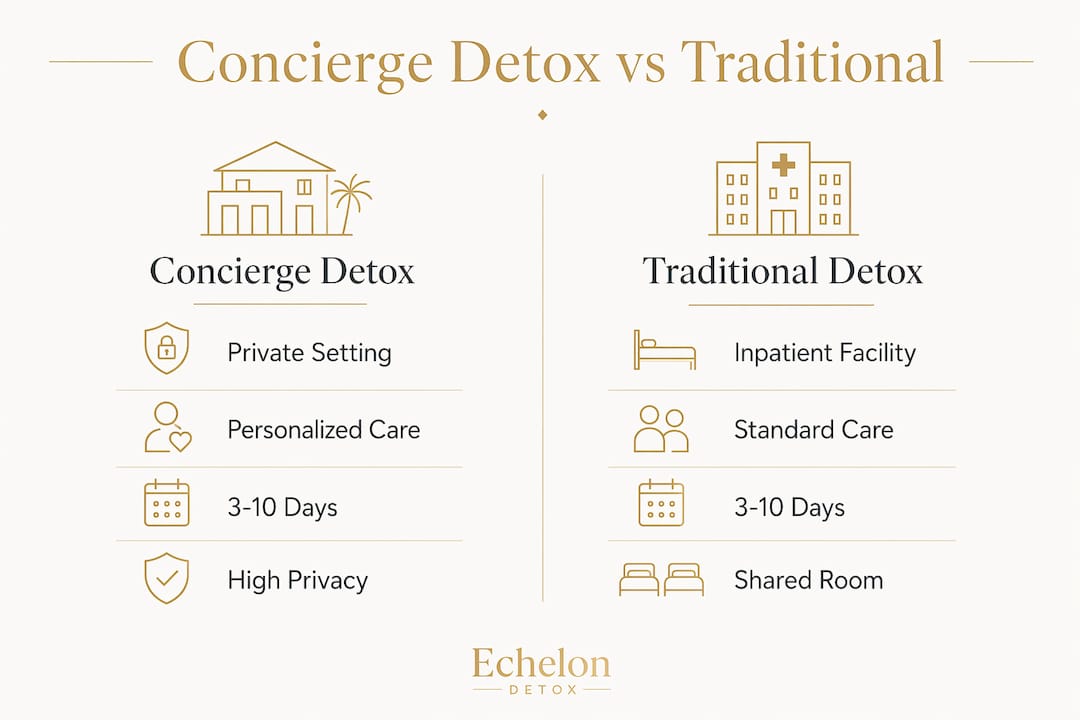
| Concierge detox | Your home | 3 to 10 days | No | Very high | Professionals, executives, privacy-sensitive individuals |
| Inpatient medical detox | Licensed facility | 3 to 10 days | No | Moderate | Individuals needing facility-level monitoring |
| Rapid detox | Hospital/clinic | 1 to 2 days | Yes (anesthesia) | Moderate | Opioid dependence only |
Standard medical detox follows a natural withdrawal timeline, typically lasting 3 to 10 days depending on the substance and severity of dependence. It uses medications to prevent dangerous complications, and it prepares patients for further addiction treatment without shortcuts.
Rapid detox, by contrast, uses sedation or general anesthesia to accelerate opioid withdrawal into a compressed 1 to 2 day window. The appeal is speed, but rapid detox carries a significantly higher risk of life-threatening reactions compared to standard medical detox. It is not appropriate for alcohol or benzodiazepine withdrawal, and it does not eliminate post-acute withdrawal symptoms.
Concierge detox follows the same evidence-based protocols as inpatient medical detox. The difference is the setting and the level of personalized attention. For business professionals seeking concierge detox services in California, Spokane, Washington, or Orlando, Florida, the clinical outcome is comparable to a licensed facility, with the added benefit of remaining in a familiar, private environment.
Pro Tip: Before choosing any detox service, ask the provider directly: What medications do you use? How often are vitals checked? What is your protocol if I need emergency hospital transfer? Any qualified provider will answer these questions without hesitation.
What medical protocols keep you safe during concierge detox?
Safety during at-home detox depends entirely on the quality of clinical protocols in place. Alcohol and benzodiazepine withdrawal are the highest-risk categories. Both can cause seizures and delirium tremens within 24 to 72 hours of stopping use, and unsupervised withdrawal from either substance can be fatal. This is not a scenario where willpower substitutes for medicine.
A qualified concierge detox program addresses this through several layers of clinical safeguards:
- Medication-assisted withdrawal management. Physicians prescribe benzodiazepines for alcohol withdrawal and buprenorphine for opioid withdrawal, along with supportive medications for nausea, pain, and sleep disruption. Every protocol is calibrated to the individual patient based on clinical evaluation.
- Continuous vital sign monitoring. Nurses check blood pressure, heart rate, temperature, and neurological status on a scheduled basis throughout each day and night.
- Seizure and delirium tremens screening. Physicians use validated clinical tools such as the CIWA-Ar scale for alcohol withdrawal to assess severity and adjust medications in real time.
- 24/7 physician availability. If a nurse identifies a concerning change, a physician is reachable immediately, not the next morning.
- Emergency transfer protocols. Every reputable concierge detox program maintains clear criteria for when a patient requires hospital-level care and coordinates that transfer without delay.
The duration of detox typically ranges from 3 to 10 days. Alcohol and benzodiazepine cases often require the full 10 days due to the extended risk window. Opioid detox may resolve faster with substitution medications like buprenorphine or methadone.
Pro Tip: If a provider cannot tell you which validated clinical scale they use to monitor withdrawal severity, that is a red flag. Protocols like CIWA-Ar and COWS are standard tools in evidence-based detox care.
What are the benefits and challenges of concierge detox?
The practical advantages of choosing a private in-home detox service are significant, particularly for individuals who cannot or will not enter a residential facility.
Key benefits include:
- Complete privacy. No intake paperwork at a facility, no shared rooms, no risk of being recognized. This matters deeply for executives, physicians, attorneys, and public figures. Professionals seeking concierge detox in Oklahoma, South Carolina, or Washington State consistently cite confidentiality as their primary reason for choosing this model.
- Personalized care. Your detox plan reflects your medical history, substance use pattern, and personal preferences. There is no one-size-fits-all protocol.
- Comfort and familiarity. Recovering in your own home, surrounded by your own belongings and people you trust, reduces anxiety and supports the healing process.
- Flexible scheduling. Care can begin within 24 to 48 hours of your initial assessment, without waiting lists or facility availability constraints.
- Dedicated medical staff. The care team's sole focus is you, not a ward of patients.
Challenges to consider honestly:
- Home environment suitability. Your home must be a safe, stable space. Active conflict, easy access to substances, or lack of a supportive household member can complicate care delivery.
- Cost and insurance. Concierge detox is a premium service. Insurance coverage varies widely, and many programs operate on a private-pay basis. Clarify costs and coverage before committing.
- Medical risk threshold. Patients with severe cardiac conditions, a history of complicated withdrawal, or multiple substance dependencies may require a higher level of facility-based care. A qualified physician will screen for this during the initial assessment.
For Washington professionals and others in high-visibility careers, the privacy benefit alone often outweighs the cost consideration.
What to expect: the concierge detox process step by step
Understanding the process from start to finish removes uncertainty and helps you prepare practically and mentally.
- Initial clinical evaluation. A licensed physician conducts a thorough intake assessment covering your substance use history, medical conditions, current medications, and prior withdrawal experiences. This determines eligibility and shapes your care plan.
- Medication protocol design. Based on the assessment, the physician prescribes a withdrawal management regimen. This is individualized, not a template.
- Home environment preparation. The care team advises you on setting up a safe space: removing substances, ensuring a quiet recovery room, and confirming that a trusted support person will be present.
- Active detox phase. Nurses arrive at your home and begin monitoring. Medications are administered on schedule. Vitals are checked regularly. The physician reviews progress daily and adjusts the protocol as needed.
- Transition planning. As the acute withdrawal phase resolves, your care team connects you with the next level of support.
That last step is not optional. Without subsequent rehab or therapy, relapse rates exceed 80% within 30 days of detox completion. Detox addresses physical dependence. It does not resolve the psychological, behavioral, and social dimensions of addiction. A responsible concierge detox provider will discuss detox before rehab as part of your care plan from day one.
| Stage | Typical Timeframe | Key Activity |
|---|---|---|
| Assessment and planning | Day 1 | Clinical evaluation, medication prescription |
| Early withdrawal | Days 1 to 3 | Highest risk window, intensive monitoring |
| Active detox | Days 3 to 7 | Symptom management, medication tapering |
| Stabilization | Days 7 to 10 | Vitals normalize, transition planning begins |
| Post-detox handoff | Day 10 onward | Connection to therapy, rehab, or outpatient care |
Key takeaways
Concierge detox is medically supervised in-home withdrawal care that delivers the same clinical safety as inpatient detox with significantly greater privacy, personalization, and comfort for qualifying patients.
| Point | Details |
|---|---|
| Clinical definition | Concierge detox is private in-home medical detox, not a wellness service or self-guided program. |
| Safety protocols | Licensed physicians and nurses monitor vitals, manage medications, and maintain emergency transfer plans throughout care. |
| Detox is not treatment | Without follow-up rehab or therapy, relapse rates exceed 80% within 30 days of completing detox. |
| Who it serves best | Executives, professionals, and privacy-sensitive individuals who need medically sound care without entering a facility. |
| Ask before you commit | Confirm medication protocols, monitoring frequency, and emergency criteria before choosing any concierge detox provider. |
What I've learned from watching people choose the wrong detox path
The most common mistake I see is people treating detox as the finish line. They complete a medically sound withdrawal, feel physically better, and interpret that as recovery. It is not. Detox resolves physical dependence. The psychological and behavioral dimensions of addiction remain entirely intact after the last medication dose.
The second mistake is underestimating withdrawal risk. Alcohol and benzodiazepine withdrawal kill people every year who attempt to stop without medical supervision. The confidence that comes from having stopped before, or from reading about withdrawal online, is not a substitute for a physician's assessment. I have seen individuals with no prior complicated withdrawal history develop seizures. Risk cannot be predicted by willpower or past experience alone.
What I respect about well-run concierge detox programs is the honesty they bring to both of these realities. The best providers, including Echelondetox, are direct about what detox can and cannot do. They build transition planning into the care model from the first conversation, not as an afterthought. They screen patients honestly for home suitability and refer out when a higher level of care is clinically appropriate.
If you are researching this option, the right question is not just "Is concierge detox safe?" It is "Is this provider qualified to make that determination for my specific situation?" Credentials, protocols, and transparency matter far more than the comfort of the marketing language.
— Nichol
Start your safe, private detox with Echelondetox
If you are ready to take the first step toward withdrawal with dignity and medical support, Echelondetox provides exactly that. Their physician-guided, in-home detox services are available nationwide, with 24/7 nursing care, individualized medication protocols, and absolute confidentiality from the first call to the final day of care.

Echelondetox serves professionals, executives, and individuals across California, Texas, Washington State, Oklahoma, South Carolina, Florida, and beyond. Every care plan begins with a thorough clinical assessment and is built around your health history, lifestyle, and recovery goals. Healing begins at home. Reach out to Echelondetox today to speak with a licensed physician about whether concierge detox is the right fit for you.
FAQ
What does concierge detox mean?
Concierge detox means medically supervised drug or alcohol withdrawal conducted in your own home, with licensed physicians and nurses providing personalized, around-the-clock care. It is the private, in-home equivalent of inpatient medical detox, designed for individuals who prioritize confidentiality and individualized treatment.
Is concierge detox medically safe?
Yes, when delivered by licensed physicians and nurses following evidence-based protocols, concierge detox is medically safe for qualifying patients. Providers use validated monitoring tools, prescription medications, and emergency transfer plans to manage withdrawal risks including seizures and delirium tremens.
How long does concierge detox take?
Concierge detox typically lasts 3 to 10 days depending on the substance and the severity of dependence. Alcohol and benzodiazepine detox often requires the full 10 days due to the extended risk window, while opioid detox may resolve faster with substitution medications.
Who is concierge detox best suited for?
Concierge detox is best suited for executives, professionals, public figures, and individuals who need medically sound withdrawal care but cannot or will not enter a residential facility. It is particularly valued by those who require complete privacy, flexible scheduling, and a dedicated care team.
Does detox alone treat addiction?
Detox alone does not treat addiction. It manages acute physical withdrawal safely, but without follow-up treatment such as therapy or rehabilitation, relapse rates exceed 80% within 30 days. Detox is the first step in recovery, not the complete solution.