

If you've been researching options for yourself or someone you care about, understanding what is medical detox protocol may be the most important first step you take. Medical detox is not simply "quitting cold turkey." It is a structured, physician-supervised process designed to manage withdrawal safely, minimize physical risk, and prepare a person for longer-term recovery. Without proper medical oversight, withdrawal from alcohol, opioids, or benzodiazepines can become life-threatening. This guide breaks down exactly how the medical detox process works, what to expect during detox, and why the protocol matters.
Table of Contents
- Key takeaways
- What is medical detox protocol: the three core phases
- Medications used during medical detox
- How detox timelines and settings differ
- Preparing for medical detox
- My perspective on medical detox protocols
- Safe, private medical detox with Echelondetox
- FAQ
Key takeaways
| Point | Details |
|---|---|
| Three defined phases | Medical detox follows evaluation, stabilization, and transition phases to manage withdrawal safely. |
| Medication is central | Physicians use targeted medications to reduce withdrawal severity and prevent dangerous complications. |
| Timelines vary by substance | Alcohol detox typically spans 5 to 10 days, while opioid and other substance timelines differ. |
| Detox is not treatment | Completing detox without connecting to ongoing care significantly increases the risk of relapse and overdose. |
| Setting matters | Inpatient and outpatient detox serve different risk levels; your health history determines the right fit. |
What is medical detox protocol: the three core phases
The medical detox process is built around three sequential phases. Each phase has a specific clinical purpose, and skipping or rushing any one of them creates real risk. Here is how each phase works in practice.
Phase 1: Evaluation
Before any medication is administered or monitoring begins, a licensed physician conducts a thorough intake assessment. This covers your complete substance use history, current medications, co-occurring physical or mental health conditions, and psychosocial context. Comprehensive intake assessments reduce the risk of dangerous drug interactions and allow the care team to build a truly individualized plan. If you have a history of withdrawal seizures or delirium tremens, that information directly shapes your medication protocol and monitoring intensity.

Phase 2: Stabilization
This is the active core of the detoxification protocol. You receive 24/7 medical supervision with continuous vital sign monitoring, medication-assisted symptom management, nutritional support, and emotional support including counseling. The stabilization phase is not static. Physicians re-evaluate your condition regularly to adjust medications and respond to unexpected complications or flare-ups from co-occurring conditions. For alcohol withdrawal specifically, symptoms can begin within 6 to 12 hours after the last drink, with the most intense and dangerous period occurring around days two and three.
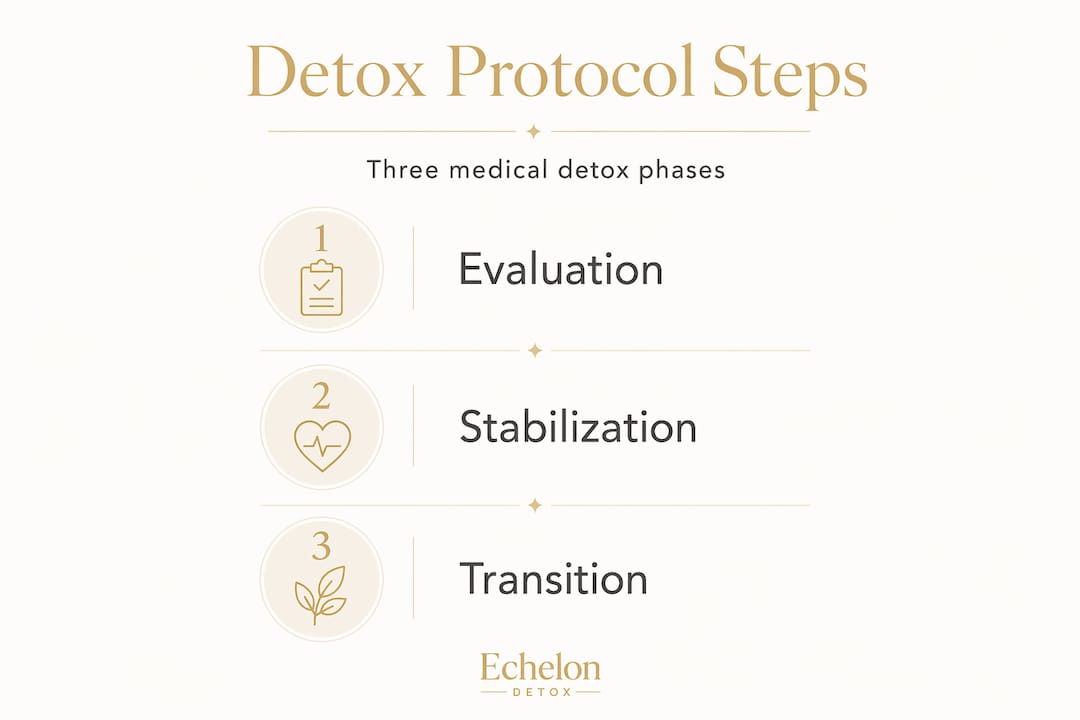
Phase 3: Transition
The final phase of the standard detox protocol focuses on discharge planning and connecting you to the next level of care. This means identifying appropriate treatment programs, arranging follow-up appointments, and ensuring you leave with a concrete aftercare plan. Without this transition, the clinical gains made during stabilization are at serious risk.
Pro Tip: Before you enter any detox program, ask specifically what the discharge planning process looks like. A reputable facility will have this conversation with you from day one, not the day before you leave.
Medications used during medical detox
Medication is not optional in a medically sound detoxification protocol. It is the mechanism by which physicians prevent life-threatening complications and reduce the suffering that causes people to abandon detox prematurely. The specific medications used depend on the substance involved, the severity of dependence, and your individual health profile.
Common medications used during detox include:
- Benzodiazepines (such as diazepam or lorazepam): The primary treatment for alcohol and benzodiazepine withdrawal. They prevent seizures and reduce the risk of delirium tremens, which can be fatal without intervention.
- Buprenorphine and methadone: Both are standard medications for opioid use disorder and are used during opioid detox to reduce withdrawal symptoms and cravings. Addiction experts now recommend initiating these medications in hospital settings as a core standard of care.
- Phenobarbital: Used in some cases as an alternative or adjunct to benzodiazepines, particularly for patients with complex withdrawal histories.
- Supportive medications: This category includes antiemetics for nausea, non-benzodiazepine sleep aids, and medications for anxiety and elevated blood pressure. These medications are tailored to symptom severity and administered under strict supervision throughout the detox process.
The medical model of detox using physician-led teams and targeted medication is the gold standard, particularly for substances that carry life-threatening withdrawal risks. This is a meaningful distinction from non-medical approaches.
It is worth addressing rapid detox directly, since many people encounter it while researching options. Rapid detox uses sedation to compress withdrawal into one to two days. While it may sound appealing, rapid detox carries higher risks and is restricted to certain opioid cases. It also excludes the psychosocial support that is built into standard protocols, which contributes to higher relapse rates despite the shorter timeline.
Pro Tip: Ask any facility you consider whether their medication protocol is individualized or standardized. A protocol that treats every patient identically is a warning sign, not a reassurance.
How detox timelines and settings differ
One of the most common misunderstandings about the medical detox process is that it follows a fixed schedule. It does not. The timeline and intensity of your detox depend on the substance involved, how long and how heavily you have used it, your overall physical health, and whether co-occurring conditions are present.
| Factor | Inpatient detox | Outpatient detox |
|---|---|---|
| Supervision level | 24/7 medical monitoring on-site | Scheduled check-ins with clinical support |
| Best suited for | High-risk withdrawal, complex health history | Low-risk cases, strong home support system |
| Substance types | Alcohol, benzodiazepines, polysubstance | Some opioid cases with low risk factors |
| Duration | Typically 5 to 10 days for alcohol | Varies; often shorter with more flexibility |
| Privacy | Limited by facility environment | Higher, especially with in-home services |
For alcohol specifically, detox typically lasts 5 to 10 days with the highest risk period concentrated in the first 72 hours. Opioid detox timelines vary considerably depending on whether short or long-acting opioids were used. Some individuals with low risk factors may safely complete outpatient detox with clinical support, but this is a clinical determination, not a personal preference.
Co-occurring mental health conditions, such as anxiety disorders or depression, add complexity to any detox plan. They can intensify withdrawal symptoms and require additional medication management. Individualized detox plans account for drug metabolism, tolerance history, prior withdrawal complications, and mental health diagnoses to reduce these risks.
One point that cannot be overstated: detox is not addiction treatment. It is the medical management of withdrawal. Lack of post-detox treatment significantly increases the risk of fatal overdose because tolerance drops during detox. Connecting to a treatment program after detox is not optional if sustained recovery is the goal.
Preparing for medical detox
Knowing what to expect during detox reduces fear and helps you make better decisions. Here is what the process typically looks like from the patient's perspective.
- Intake and assessment: You will answer detailed questions about your substance use, physical health, mental health history, and current medications. Be as honest as possible. This information protects you.
- Medical monitoring begins immediately: Vital signs, neurological checks, and symptom scoring tools are used from the first hours to establish your baseline and detect early warning signs.
- Medications are adjusted in real time: Your care team does not set a medication plan and walk away. They monitor your response and make changes as your withdrawal progresses.
- Emotional support is part of the protocol: Reputable programs include counseling or peer support during detox, not just after. This matters for both comfort and retention in care.
- Discharge planning starts early: Ask about your aftercare options before you are discharged. Knowing where you are going next reduces the risk of leaving treatment prematurely.
Choosing a reputable detox program means looking for physician-led care, clear medication protocols, individualized assessment, and a defined transition plan. Avoid any program that cannot explain its clinical approach in plain language or that does not discuss aftercare from the beginning.
My perspective on medical detox protocols
I've worked alongside people navigating detox at some of the most vulnerable points in their lives, and the single most consistent mistake I see is treating detox as the finish line. It is not. It is the starting point.
In my experience, the protocols that produce the best outcomes are the ones that treat the whole person, not just the withdrawal symptoms. That means accounting for sleep disruption, nutritional deficits, anxiety, and the psychological weight of what comes next. When those elements are addressed during stabilization, people arrive at the transition phase with more than just cleared substances. They arrive with some stability.
What I find genuinely underappreciated is how much the setting shapes the experience. A person who detoxes in a clinical environment that feels cold or impersonal is far less likely to engage with follow-up treatment. Comfort and dignity during detox are not luxuries. They are clinical variables that affect outcomes.
The rapid detox conversation is one I have had many times. People are drawn to it because it sounds efficient. But compressing withdrawal without the surrounding support structure does not address the underlying condition. It just shortens one part of a much longer process, and it does so with added risk.
My honest view: the best detox protocol is one that is medically sound, individually tailored, and delivered by people who treat you with respect. That combination is rarer than it should be, but it exists.
— Nichol
Safe, private medical detox with Echelondetox
If you are ready to take the next step, you deserve care that is both medically rigorous and genuinely respectful of your privacy and dignity.

Echelondetox provides physician-guided, in-home medical detox for alcohol and drug withdrawal, serving clients nationwide with 24/7 licensed medical supervision. Every detox plan is built around your specific health history, substance use, and recovery goals. There are no waiting rooms, no shared facilities, and no compromises on confidentiality. Whether you are managing alcohol withdrawal, opioid dependence, or polysubstance concerns, the team at Echelondetox is available to discuss your situation and help you understand your options. Many medically necessary detox services may be covered by insurance. Reach out today to speak with a care coordinator.
FAQ
What is a medical detox protocol?
A medical detox protocol is a structured, physician-supervised process for managing withdrawal from drugs or alcohol. It follows three phases: evaluation, stabilization with medication and monitoring, and transition to ongoing treatment.
How long does medical detox take?
Detox timelines vary by substance and individual health factors. Alcohol detox typically lasts 5 to 10 days, with the most intense symptoms occurring in the first 72 hours.
What medications are used during detox?
Common medications include benzodiazepines for alcohol and benzodiazepine withdrawal, buprenorphine or methadone for opioid withdrawal, and supportive drugs for nausea, anxiety, and sleep disruption.
Is detox the same as addiction treatment?
No. Medical detox manages the physical process of withdrawal but does not address the underlying causes of addiction. Connecting to a treatment program after detox is critical for long-term recovery.
Can detox be done at home?
Yes, with proper medical supervision. In-home detox through a licensed physician-guided service can be safe and appropriate for certain individuals, particularly those with privacy concerns or lower medical risk profiles.